

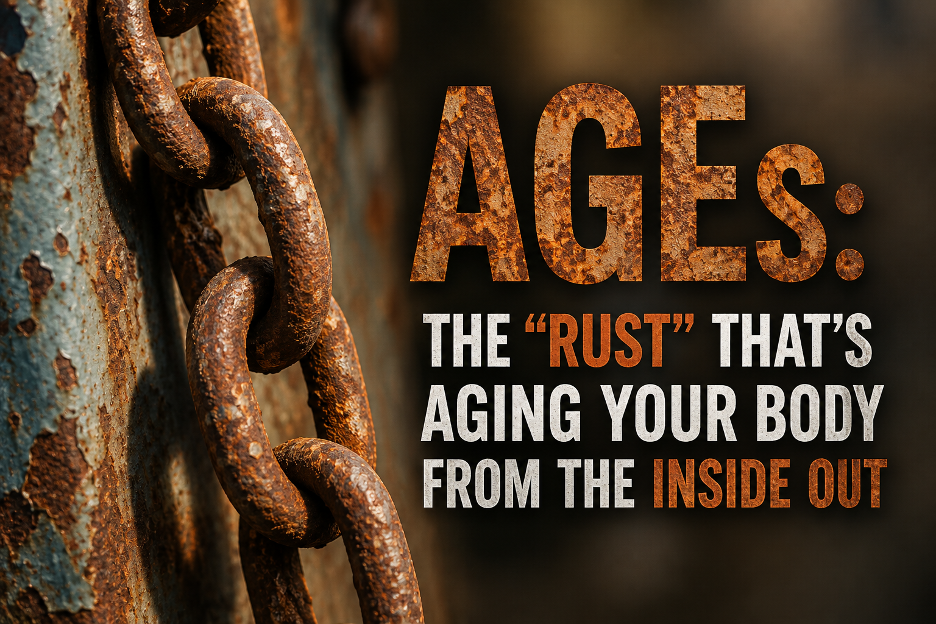
You probably know that your body ages over time. Wrinkles appear, joints become stiffer, recovery takes longer, and blood vessels lose some of their youthful flexibility. But one of the biggest contributors to this process isn’t something most people have ever heard of.
It’s called Advanced Glycation End Products, or AGEs. Think of AGEs as biological rust. Just as rust slowly damages metal, AGEs slowly damage proteins throughout your body, making tissues stiffer, less flexible, and less efficient.
The good news?
Unlike many aspects of aging, AGE accumulation is influenced by the choices you make every day. Your diet, activity level, stress management, and even certain dietary supplements may help reduce your AGE burden and support healthier aging.
What Are AGEs?
AGEs (Advanced Glycation End Products) are harmful compounds created when sugars attach to proteins or fats without the help of enzymes. Scientists call this glycation.
Imagine spilling syrup on your favorite shirt. Over time, it hardens, becomes sticky, and is difficult to remove. That’s similar to what glycation does inside your body.
Sugars stick to important proteins like:
- Collagen
- Elastin
- Blood vessel proteins
- Eye tissues
- Nerve cells
- Kidney tissues
- Brain cells
As more AGEs accumulate, these proteins become stiff, brittle, and less functional.
Why Do AGEs Increase with Age?
Everyone forms AGEs, but AGE production can speed up for several reasons. One of the biggest is frequent high blood sugar, because extra sugar in the bloodstream creates more opportunities for sugars to attach to proteins and fats. Oxidative stress and chronic stress can also add to the problem by placing more strain on the body’s cells and repair systems.
Food choices and cooking methods matter, too. Highly processed foods and foods cooked at very high heat can raise AGE exposure. Low physical activity may also contribute, while the body’s natural repair systems tend to become less efficient as we get older.
Over decades, AGEs slowly build throughout the body.
Why Are AGEs Harmful?
AGEs do more than simply sit inside the body’s tissues. Once they are formed, they can irritate cells and make it harder for those cells to work the way they should. One way this happens is through a “receiving spot” on cells called RAGE. You can think of it like a switch that gets turned on when AGEs attach to it.
When this switch is turned on too often, it can create more wear and tear inside the body. It may increase internal stress, interfere with normal cell communication, and make tissues age faster over time. In simple terms, AGEs can help set off a chain reaction that leaves the body’s tissues less flexible, less resilient, and more likely to show signs of aging
Where Do AGEs Cause Problems?
Skin
AGEs can affect the skin because they attach to collagen and elastin, the proteins that help skin stay firm, smooth, and stretchy. Over time, this can make the skin’s support structure more stiff and less flexible. As a result, skin may wrinkle more easily, sag more noticeably, lose some of its bounce, and take longer to repair after cuts, scrapes, or irritation.
Blood Vessels
Blood vessels are healthiest when they can gently widen and narrow as blood moves through them. AGEs can make the walls of blood vessels stiffer, which may make it harder for them to relax and move normally. Over time, this loss of flexibility can place extra stress on the heart and circulation, making healthy blood flow more difficult to maintain.
Joints
Joints depend on smooth, flexible cartilage to cushion movement and help the body bend, twist, and move comfortably. When AGEs build up in the collagen inside cartilage and nearby tissues, those areas can become less springy and more rigid. This may contribute to greater stiffness, reduced comfort with movement, and a feeling that the joints do not recover or move as easily as they once did.
Eyes
AGEs may also affect the eyes, especially the lens and retina, which are important for clear vision. When proteins in the eye become less flexible or more damaged over time, it may contribute to age-related vision changes. In simple terms, AGE buildup can add to the wear and tear that makes the eyes more vulnerable as we get older.
Brain
The brain uses a lot of energy and is especially sensitive to everyday wear and tear. AGEs may add stress to brain cells and make it harder for them to stay healthy and resilient with age. While many factors influence brain aging, keeping AGE buildup lower may be one more way to support clearer thinking, better cell protection, and long-term brain health.
Where Do AGEs Come From?
AGEs come from two main places: inside your body and from the foods you eat.
Inside the Body
Your body makes some AGEs naturally every day as part of normal life. This happens when sugar in the bloodstream comes in contact with proteins or fats and slowly sticks to them. This process is more likely to happen when blood sugar rises often or stays elevated for long periods of time.
This does not mean sugar is “bad” by itself, but it does mean the body handles sugar best when it comes in steady, reasonable amounts. Large blood sugar spikes give sugar more chances to attach to important tissues throughout the body. That is one reason healthy blood sugar habits matter for everyone, not only for people with diabetes.
The Food We Eat
Diet also plays a major role because AGEs can form in food before you ever eat it. Cooking with very high heat, especially when the food is dry, browned, grilled, fried, broiled, or charred, can create more AGEs. This is the same browning process that gives foods like grilled steak, crispy bacon, fried chicken, and toasted foods their color and flavor.
Foods that are high in fat or protein, such as meats, cheeses, and processed meats, tend to form more AGEs when they are cooked at high temperatures. Fast food, deep-fried foods, bacon, grilled steaks, charbroiled meats, and fried chicken are common examples of foods that can be higher in AGEs because of the way they are prepared.
Cooling Techniques Matter
The good news is that cooking style can make a big difference. Moist, lower-temperature cooking methods usually create fewer AGEs because they use water and gentler heat. Steaming, boiling, poaching, stewing, slow cooking, and pressure cooking are all examples of cooking methods that are generally more AGE-friendly.
You do not have to give up flavorful food to lower AGE exposure. Simple changes can help, such as cooking meat more slowly, avoiding heavy charring, choosing moist cooking methods more often, and using marinades with lemon juice or vinegar before cooking. These small choices may help reduce the AGE load from food while still allowing meals to be enjoyable and satisfying.
Lifestyle Changes That Help Lower AGE Burden
Diet
Food is your first line of defense. Consider eating this way:

These foods provide antioxidants and polyphenols that help protect tissues from oxidative stress associated with AGE formation.

A lower-AGE eating pattern has been associated with lower circulating AGE markers and improved metabolic health markers, although research continues to evolve.
Exercise
Exercise is one of the most powerful anti-aging habits available.
Regular physical activity helps:
- Improve insulin sensitivity
- Reduce blood sugar spikes
- Lower oxidative stress
- Support healthy blood vessels
- Improve mitochondrial function
Goals:
- 150 minutes of moderate activity weekly
- Strength training 2–3 times each week
- Daily walking
Even a brisk walk after meals may help reduce post-meal blood sugar excursions.
Spirituality and Stress Reduction
Stress affects far more than your mood.
Chronic stress increases cortisol and can contribute to higher blood sugar, greater oxidative stress, and faster biological aging.
Practices that may help include:
- Prayer
- Meditation
- Gratitude journaling
- Deep breathing
- Spending time in nature
- Strong social connections
- Quality sleep
A calmer mind often supports a healthier body.
Supplements That May Help Support Healthy Glycation Balance
No dietary supplement can completely stop aging or eliminate AGEs. However, several nutrients have been investigated for their ability to reduce oxidative stress, support healthy glucose metabolism, or interfere with glycation pathways.
Benfotiamine
Benfotiamine is a highly bioavailable form of vitamin B1. Research suggests it may reduce the formation of harmful glycation intermediates by supporting normal glucose metabolism.
Carnosine
Carnosine is one of the best-studied natural antiglycation compounds. It may help bind reactive carbonyl compounds before they can form AGEs and also provides antioxidant support.
Alpha-Lipoic Acid
Supports:
- Healthy glucose metabolism
- Antioxidant recycling
- Mitochondrial function
These actions may indirectly reduce AGE formation.
Vitamin C
Vitamin C helps protect collagen from oxidative damage while supporting the production of new collagen.
Vitamin E
Works together with vitamin C to help protect cell membranes from oxidative stress.
Curcumin (HydroCurc®)
Curcumin has demonstrated antioxidant and antiglycation activity in laboratory studies and may help reduce oxidative stress that contributes to AGE accumulation.
Green Tea Extract (EGCG)
Green tea polyphenols may help reduce oxidative stress and influence pathways involved in glycation.
Resveratrol (VeriSperse®)
Resveratrol supports healthy cellular stress responses and has demonstrated antiglycation activity in experimental research.
Carotenoids (CaroRite®)
Carotenoids such as lutein, zeaxanthin, lycopene, astaxanthin, and beta-carotene help protect cell membranes from oxidative damage. By reducing oxidative stress, carotenoids may indirectly help slow the processes that promote AGE formation.
Omega-3 Fatty Acids (AquaCelle® Omega-3)
Omega-3s help support healthy cell membranes and cardiovascular health while reducing oxidative stress associated with aging.
NSK-SD® (Nattokinase)
Recent cell and animal studies show that nattokinase (NSK-SD®) can reduce the production of AGEs. AGEs can make blood vessels stiffer and less flexible over time.
By supporting vascular health, NSK-SD® may help address one of the body systems most affected by long-term AGE accumulation. While it should not be considered an “anti-AGE supplement,” it can be viewed as part of a comprehensive healthy-aging strategy.
The Bottom Line
You cannot completely avoid AGEs. Nor should you try. They’re a natural part of living. But you can dramatically influence how quickly they accumulate. Think of AGE management like protecting a beautiful leather chair.
Every day you can either:
- Leave it in the hot sun
- Spill sugary drinks on it
- Ignore maintenance
Or you can:
- Protect it
- Clean it
- Condition it
- Preserve it
Your body works much the same way. The choices you make today- how you cook your food, how active you are, how well you manage stress, and whether you provide your body with the nutrients it needs- may help keep your tissues healthier and more resilient for years to come.
Healthy aging isn’t about stopping time. It’s about slowing the wear and tear that time naturally brings.