

by Justin Kalafat
Athletes aren’t just looking for supplements that provide an immediate boost. Supporting energy metabolism, glucose regulation, body composition, and recovery can also play an important role in getting more out of training. That’s one reason berberine has become an interesting ingredient in sports nutrition.
Berberine is known for its effects on glucose metabolism and AMPK, a cellular energy-sensing pathway involved in how the body manages fuel. While most berberine research has focused on metabolic health rather than trained athletes, these mechanisms are relevant to people who train regularly and place high demands on their energy systems.
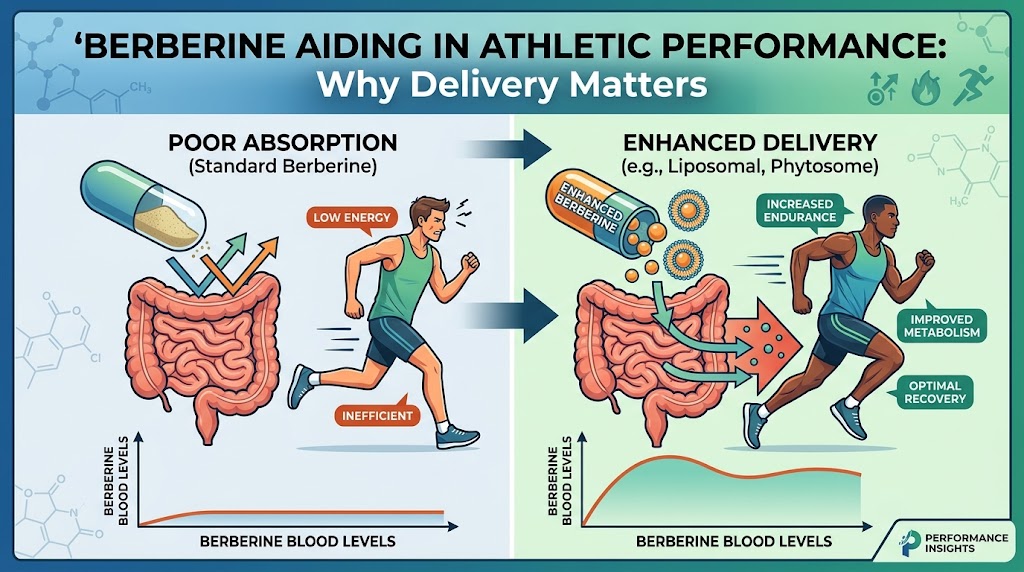
The challenge is that conventional berberine isn’t absorbed especially well. That’s where newer, more bioavailable forms of berberine become interesting.
Metaberine®
Metaberine® is designed to deliver berberine more efficiently, allowing athletes to get metabolic support at a much lower dose than traditional berberine.
For athletes, the potential benefit goes beyond simply taking berberine. By supporting pathways involved in glucose uptake, insulin sensitivity, and cellular energy metabolism, Metaberine® may help the body manage fuel more effectively during demanding training cycles.
That could be particularly relevant for athletes focused on energy management, metabolic health, and body composition. Better metabolic regulation may also complement a high-carbohydrate training diet by supporting the body’s ability to handle glucose.
Metaberine® shouldn’t be positioned as a direct performance enhancer like caffeine or creatine. The more compelling story is its potential to support the metabolic systems that contribute to consistent training and performance.
BioBerb®
BioBerb® takes a different approach to the same fundamental challenge: improving the delivery of berberine.
Its enhanced bioavailability is particularly interesting for athletes because conventional berberine can require relatively high doses and may cause gastrointestinal discomfort. A more efficiently absorbed form can potentially provide meaningful berberine exposure with less material, making it easier to incorporate into a daily sports nutrition routine.
The potential athletic applications of BioBerb® center around glucose regulation, energy metabolism, body composition, and recovery support. By influencing pathways such as AMPK and insulin sensitivity, it may help support how the body manages nutrients and energy during periods of heavy training.
Again, these mechanisms are promising, but they shouldn’t be confused with proven improvements in strength, endurance, or competition performance. The strongest case for BioBerb® is its combination of berberine’s metabolic potential with improved delivery and tolerability.
The Takeaway
Metaberine® and BioBerb® both bring berberine into sports nutrition from a metabolic perspective, helping support the systems involved in glucose management, energy regulation, and body composition rather than acting as traditional stimulants.
Their enhanced delivery approaches may make berberine more practical for athletes, but more research in trained athletes is still needed to determine how these metabolic benefits ultimately translate into measurable performance.
Disclaimer: These statements reflect my personal opinions and do not represent the views of my employer.