

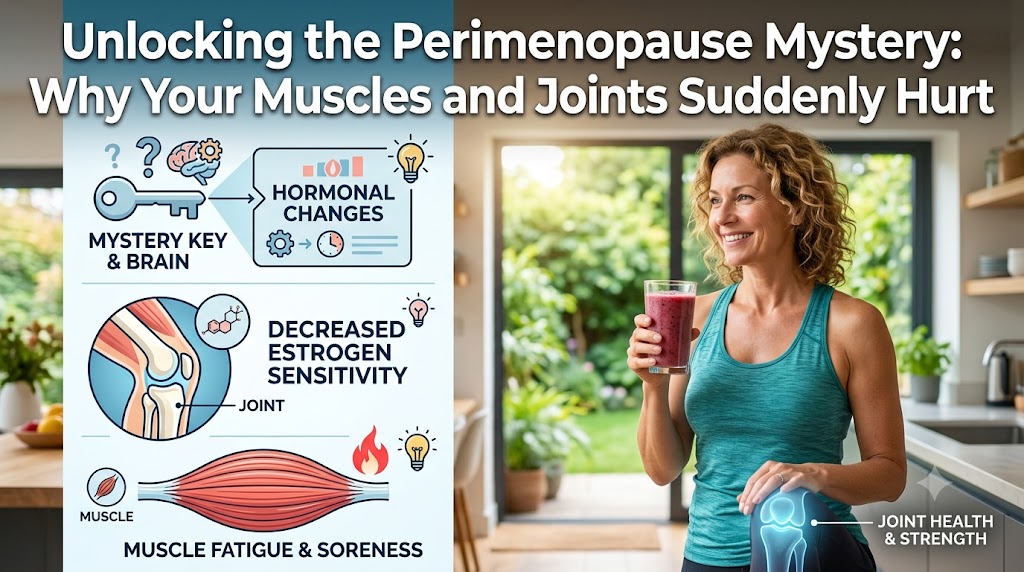
If you wake up feeling like you spent the night in a wrestling match, despite doing nothing more strenuous than sleeping, you aren’t alone. Many women in their late 30s and 40s are blindsided by sudden, unexplained body aches, persistent joint stiffness, and a maddening delay in muscle recovery.
Hot flashes and mood swings often get the most attention, but aches, stiffness, and muscle discomfort can be some of the first signs of perimenopause.
Why Is This Happening? The Estrogen Connection
The root cause of midlife aches comes down to a steep decline and erratic fluctuation in estrogen. We often think of estrogen merely as a reproductive hormone, but it functions as a master regulator of structural integrity and inflammatory response throughout the body.

Connective Tissue & Cartilage: Estrogen helps keep your joints cushioned, flexible, and well-hydrated. When estrogen levels drop, those tissues can become drier and less springy, which may make joints feel stiff, achy, or more easily irritated.
Muscle Maintenance: Estrogen also helps your body repair and maintain muscle. With less estrogen, it can be harder to keep muscle tone, and natural muscle loss may happen more quickly unless you stay active and strength train.
Recovery: When estrogen is lower, your body may take longer to bounce back from everyday movement, exercise, or minor strain. That slower repair process can leave you feeling sore for longer than you used to.
Lifestyle Strategies to Take Control
Hormonal shifts require an updated approach to daily habits. Fighting joint pain and muscle loss requires a proactive strategy built around movement and nutrition.
Strength Training Instead of Too Much Cardio
Lifting weights, using resistance bands, or doing bodyweight exercises helps your muscles stay strong and supports healthy bones. Too much high-impact or long cardio may make sore joints feel worse. Try simple full-body moves like squats, hip hinges, pushes, and pulls 3 to 4 times per week.
Daily Movement and Stretching
Gentle daily movement helps keep your joints loose and comfortable, much like oil helps an engine run smoothly. Add easy range-of-motion exercises, slow joint circles, and targeted stretching to help keep muscles and tendons from feeling tight.
Make Protein a Priority
As estrogen drops, your body may not use protein as well as it once did. Eating enough protein throughout the day gives your muscles the building blocks they need to stay strong and recover. A helpful goal is 1.2 to 1.6 grams of protein per kilogram of body weight each day, spread across meals.
Targeted Nutritional Support
While baseline nutrition is essential, specific science-backed ingredients can help target joint inflammation, cartilage integrity, and muscle protein synthesis directly.
Protein and Collagen
Collagen Peptides: Collagen peptides help support the tissues that hold the body together, including tendons, ligaments, skin, and joints. Their main benefit is helping these tissues stay strong and flexible. They work by providing amino acids, such as proline and glycine, that the body uses as building blocks for healthy connective tissue.
Protein Powder (Whey or Plant): Protein powder can help fill gaps when it is hard to get enough protein from meals alone. Its main benefit is supporting muscle repair, strength, and maintenance. It works by supplying essential amino acids, including leucine, that help the body rebuild and protect muscle.
Creatine Monohydrate: Creatine helps muscles produce quick energy during movement and exercise. Its main benefit is supporting strength, power, and recovery after workouts. It works by helping muscle cells make more usable energy, which may make it easier to perform and bounce back from physical activity.
Advanced Targeted Nutraceuticals
SCP-II®: SCP-II® is made from salmon cartilage and is used to support joint structure and flexibility. Its main benefit is helping joints stay cushioned and comfortable. It works by supporting the cartilage and connective tissue matrix that helps joints move smoothly.
Q-Actin®: Q-Actin® is a cucumber extract used to support joint comfort and mobility. Its main benefit is helping reduce everyday stiffness and support easier movement. It works by helping the body manage normal inflammatory signals that can affect how comfortable the joints feel.
Levagen®+: Levagen®+ is a highly absorbable form of PEA, a compound the body naturally uses to help manage discomfort. Its main benefit is supporting joint comfort and muscle recovery. It works by helping the body’s natural calming systems soothe everyday aches and support recovery after activity.
Torabolic®: Torabolic® is a fenugreek seed extract used to support lean muscle and strength. Its main benefit is helping maintain muscle during midlife without changing hormone levels. It works by supporting the body’s ability to build and preserve muscle when paired with good nutrition and strength training.
The Bottom Line
Perimenopausal joint and muscle pain isn’t just something you have to live with. As estrogen levels rise and fall during this stage of life, the body can become more prone to stiffness, soreness, slower recovery, and loss of muscle tone. These changes can affect the joints, connective tissues, cartilage, and muscles, which is why everyday movement or exercise may suddenly feel harder than it used to. By understanding how fluctuating hormones impact your tissue biology, adjusting your training and protein intake, and incorporating targeted nutrient support, you can protect your mobility, maintain your strength, and stay active through this transition. A thoughtful plan that includes strength training, daily movement, stretching, enough protein, collagen, creatine, and targeted joint-support ingredients can help your body feel stronger, recover better, and move with more comfort during perimenopause.