

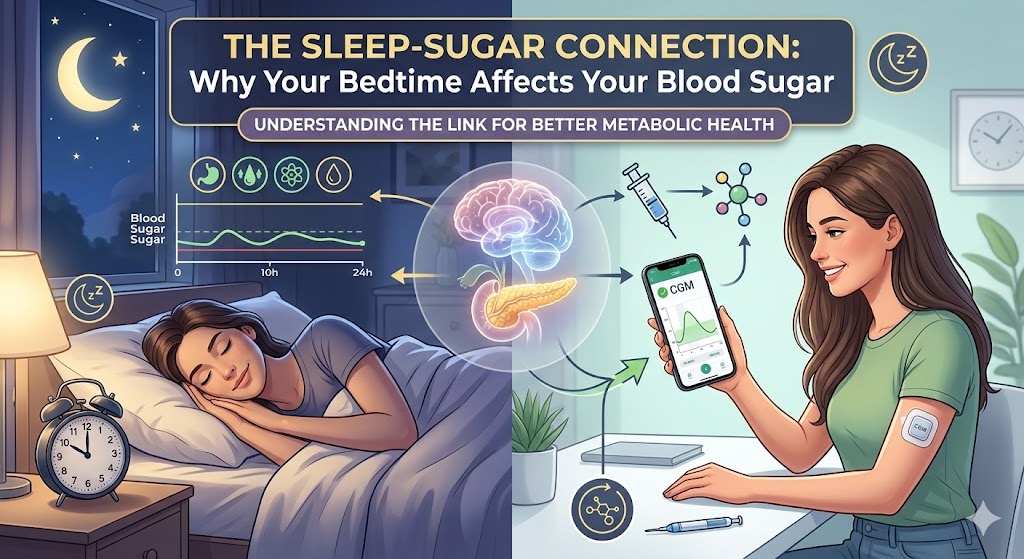
We’ve all felt that “foggy” feeling after a night of tossing and turning. You’re cranky, you’re reaching for a second (or third) coffee, and you suddenly find yourself craving every donut in a five-mile radius.
But behind the scenes, something much more complex is happening. Your body isn’t just tired; its internal chemistry is struggling to process energy. Here is the breakdown of how poor sleep disrupts your glucose metabolism and why your pillow might be your best defense against diabetes.
The Insulin “Silent Treatment”
Think of insulin as a key that unlocks your cells to let sugar (glucose) in for energy. When you sleep well, the lock works perfectly.
When you’re sleep-deprived, your cells become “stubborn.” This is called decreased insulin sensitivity. Even though your body produces insulin, your cells stop responding to it effectively. As a result, sugar stays parked in your bloodstream instead of fueling your muscles and brain. Over time, this “silent treatment” can lead to prediabetes or worse.
The Hormone Tug-of-War
Your metabolism is managed by a delicate balance of hormones, and sleep loss acts like a wrecking ball to that balance. Three key players get thrown out of whack:
- Insulin: As mentioned, it becomes less effective at lowering blood sugar.
- Ghrelin: This is your “hunger hormone.” When you don’t sleep, ghrelin levels spike, telling your brain you’re starving, specifically for high-carb, sugary foods.
- Leptin: This is your “fullness hormone.” Sleep loss tanks your leptin levels, so you never quite feel satisfied, no matter how much you eat.
The Result: You aren’t just hungrier; your body is less capable of processing the extra food you’re eating.
A Harder Path for Struggling with Blood Sugar Control
For those already living with a blood sugar problem, sleep isn’t just a luxury; it’s a critical part of the treatment plan. Restless sleep makes blood sugar levels much more volatile and harder to predict. When you don’t get enough shuteye, your body stays in a state of “stress,” releasing cortisol (the stress hormone), which further pushes blood sugar levels up.
The Prediabetes Warning
Many people live with prediabetes without knowing it. This is a stage where your glucose levels are higher than normal but haven’t yet reached the “diabetes” threshold. Consistent poor sleep is one of the fastest ways to tip the scales from prediabetes to a full diagnosis.
Quick Tips for Better Metabolic Health
If you want to keep your blood sugar in check, start with your bedroom:
- Consistency is Key: Go to bed and wake up at the same time every day (yes, even weekends).
- Cool & Dark: Keep your room around 18°C and eliminate light.
- The “No-Screen” Buffer: Put the phone away 60 minutes before bed to let your brain’s natural sleep hormones take over.
- Supplements for Sleep: My personal favorite (I use it) is Affron®. This is a clinically studied and patented saffron extract that has been proven to help.
- Supplements for Metabolic Health: Fenuflakes®, Dyglomera®, and IGOB-131® are promising options for supporting healthy blood sugar management. Fenuflakes® may help improve insulin sensitivity. Dyglomera® is known to help balance glucose levels, while IGOB-131® has shown benefits for metabolic health and weight support. These supplements complement good sleep by helping to stabilize blood sugar and promote overall metabolic wellness.