

How Your Lifestyle Tells Your Genes What to Do
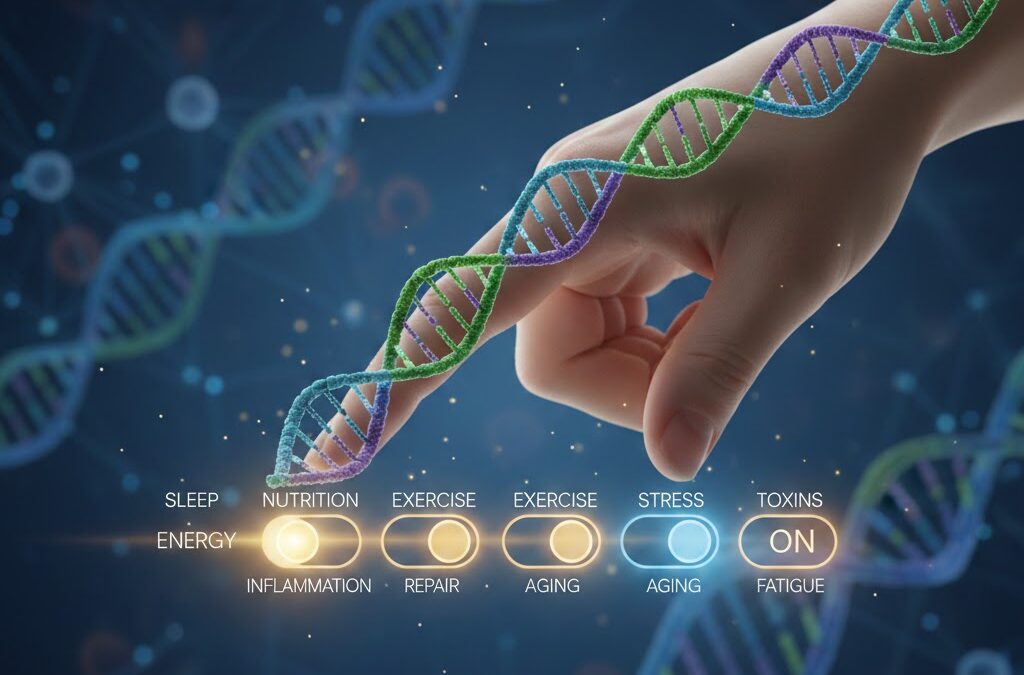
You’ve likely heard that your DNA is your “blueprint”, a permanent set of instructions that determines everything from your eye color to your height. While that’s true, it isn’t the whole story. If your DNA is the hardware of a computer, epigenetics is the software.
You can’t change the hardware you were born with, but you have a surprising amount of control over the programs that run on it.
The Light Switch Analogy
Think of your genes as a massive bank of light switches. Epigenetics is the study of how these switches are flipped.
- Gene “On”: This means the gene is “active,” like a light switch that’s been flipped up. When a gene is turned on, your body reads its instructions and uses them to make a specific protein or chemical. That protein then carries out a specific job, such as helping your cells repair themselves, digest food, or fight off infection. In simple terms, having a gene “on” is like giving your body the go-ahead to perform the task that gene controls.
- Gene “Off”: This means the gene is “inactive,” like a light switch that’s been flipped down. When a gene is off, your body ignores its instructions and doesn’t produce the protein or chemical it codes for. As a result, whatever job that gene would normally do, like repairing cells or sending signals, doesn’t happen. In other words, having a gene “off” means your body isn’t using that part of your genetic instructions right now.
At a cellular level, aging is often the result of the wrong switches being flipped at the wrong time. As we age, “youthful” genes that manage cell repair and energy might flicker off, while “pro-inflammatory” genes might get stuck in the “on” position.
The Drivers of Your “Gene Music”
Your DNA doesn’t just decide to change its expression for no reason. It is constantly listening to the environment you provide. Several key factors act as the “fingers” flipping these epigenetic switches:
- Chronic Stress: Experiencing ongoing stress can activate genes that are linked to inflammation throughout your body and feelings of anxiety.
- Diet: What you eat matters. Nutrients such as folate and vitamin B12 can help silence genes that might otherwise cause harm, acting as protective switches.
- Sleep Deprivation: Not getting enough sleep disrupts the way your genes regulate your body’s daily rhythms and metabolism, making it harder for your body to function properly.
- Toxins: Exposure to pollutants and chemicals introduces “noise” to your genetic system, which may accidentally turn on genes that shouldn’t be active.
- Physical Inactivity: When you don’t move enough, genes responsible for maintaining your muscles and helping your body burn fat can be switched off, leading to negative health effects.
The Cost of “Mis-switching”
When our epigenetic software gets “glitchy” due to poor lifestyle choices, we don’t just feel tired; our biology begins to drift. Over time, these unhealthy patterns impact:
- Energy Production: Your mitochondria (the cell’s power plants) rely on specific genes to function efficiently. As we age or as lifestyle habits take a toll, these genes can become misregulated, making mitochondria less effective at producing energy. This means your cells may not have all the fuel they need to keep your body feeling vibrant and active. When energy production drops, you might notice more fatigue, slower recovery from exercise, or a general sense of sluggishness. Protecting the genes that keep mitochondria working well is key to maintaining youthful energy levels.
- Cellular Repair: Epigenetic changes can hinder your body’s ability to repair DNA damage, a core driver of aging. Every day, your cells sustain minor damage from normal activities, environmental exposures, and even the process of living. Normally, your body has repair systems, managed by specific genes, that patch up this damage and keep everything running smoothly. However, when these genes are improperly switched off or on, repairs slow down or stop altogether. Over time, this can lead to an accumulation of errors in your cells, which not only accelerates aging but also increases the risk of disease.
- Resilience: You may find it harder to bounce back from illness or injury as your body’s “response” genes slow down. In your youth, your body responds quickly to challenges, whether fighting off a cold or healing a scraped knee. This is because certain genes rapidly activate defenses and repair mechanisms. As you age or if your lifestyle choices negatively affect your genes, these response systems slow down and become less effective. This reduced resilience manifests as longer recovery times, more frequent illnesses, and a diminished capacity to manage stress, both physically and mentally.
The Power of Choice: Rewriting the Code
Epigenetics is the study of how your lifestyle and environment influence how your genes behave. Everyday decisions, from what you eat to how you manage stress, can turn genetic switches on or off, shaping your health in ways you might not realize. This section explores the powerful link between your choices and your biology, revealing how you can actively support your body’s vitality and resilience.
Supplemental Support
Ubiquinol®: Ubiquinol® is a highly absorbable form of coenzyme Q10, a nutrient naturally present in the body. It plays a vital role in helping the mitochondria, the “power plants” of your cells, produce energy. As we age, our bodies may become less efficient at synthesizing and using coenzyme Q10, leading to reduced energy and overall vitality. By supplementing with Ubiquinol®, you can help support your cellular energy production and potentially counteract some of the natural declines that come with aging. This helps your cells stay active and healthy.
Carotenoids: Carotenoids, such as those found in CaroRite®, are potent antioxidants present in brightly colored fruits and vegetables, including carrots, sweet potatoes, and leafy greens. These compounds help protect cells from oxidative stress, a process that can damage DNA and accelerate aging. By protecting your genetic material and supporting the body’s natural repair systems, carotenoids help maintain your health at the cellular level. Including more carotenoid-rich foods in your diet or considering a supplement can help keep your cells resilient and your DNA protected.
Curcumin (from Turmeric): Curcumin is the bright yellow compound found in turmeric, a spice commonly used in cooking. It is well known for its ability to combat immune-mediated irritation, which can help calm the body and reduce chronic inflammation—a key factor in many health problems and the aging process. By influencing gene expression, curcumin may help the body maintain healthy repair mechanisms and overall wellness. Adding curcumin to your routine, either through food or supplements, may help support your body’s natural defenses.
Polyphenols (such as Resveratrol): Polyphenols are plant compounds found in foods like grapes, berries, and peanuts. One well-known polyphenol is resveratrol, which is linked to promoting resilience and longevity. Resveratrol may help your body respond better to stress and protect against age-related decline by influencing the switches that control your genes.
The best part about epigenetics is that it can change. While changes in your DNA are usually permanent, the switches that control your genes, called epigenetic marks, can often be turned on or off, so their effects aren’t set in stone.
Lifestyle Choices
By making intentional choices, you are essentially acting as a biological programmer. Here are a few lifestyle suggestions to help:
Prioritizing Whole Foods
Choosing to eat whole, nutrient-dense foods provides your body with the raw materials it needs to maintain cellular health and repair. Foods rich in antioxidants, vitamins, and minerals, like fruits, vegetables, whole grains, nuts, and seeds, help protect DNA from damage and support your body’s natural repair mechanisms. Carotenoid-rich vegetables, such as carrots and leafy greens, and polyphenol-rich fruits like berries, are particularly beneficial for cellular resilience and vitality.
Finding Movement You Enjoy
Physical activity isn’t just about exercise; it’s about movement that brings you joy and fits your lifestyle. Whether it’s dancing, hiking, yoga, or walking, regular movement supports healthy gene expression, improves mitochondrial function, and helps your body respond efficiently to stress. In turn, this boosts your energy, strengthens your immune system, and promotes longevity.
Protecting Your Peace
Managing stress and nurturing your mental well-being is critical for maintaining healthy cells and slowing the aging process. Practices such as meditation, mindfulness, spending time in nature, or simply taking quiet moments for yourself can positively influence epigenetic marks. These actions help maintain your body’s repair systems, reduce inflammation, and enhance your resilience to illness and injury.
The Bottom Line
Each of these lifestyle choices, what you eat, how you move, and how you manage stress, acts as a signal to your cells. By consciously selecting behaviors that promote health, you are telling your body to repair, thrive, and maintain youthful vitality. The power lies in your hands: your daily decisions can shape how your genes behave and directly impact your long-term well-being.
Your genes may load the gun, but your lifestyle pulls the trigger. The question is: which switches will you flip today? You are sending signals to your cells that say, “It’s time to repair, it’s time to thrive, and it’s time to stay young.”