

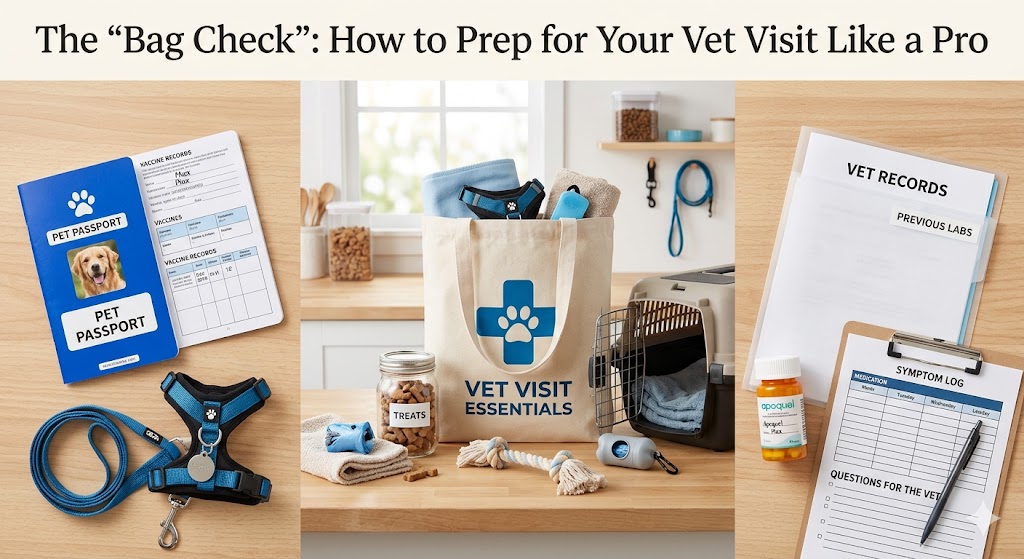
If you’ve ever been in a vet exam room, you know the vibe: it’s a race against the clock. Between the thermometer, the heart-rate check, and keeping your pet from jumping off the table, important details often get lost in the shuffle.
When it’s time to discuss supplements, “I think it’s a green bottle with a dog on it” won’t cut it. To get the most out of your appointment and ensure your pet’s safety, you need to do a “Bag Check.” Here is how to make your supplement disclosure fast, efficient, and clinically useful for your vet.
Bring the Physical Bottle (Not Just a Name)
In the world of nutraceuticals, the brand name is only half the story. As a pharmacist, I can tell you that two products labeled “Joint Support” can have markedly different active-ingredient concentrations.
- The Label Matters: Your vet needs to see the Guaranteed Analysis and the Inactive Ingredients. They are looking for specific dosages of things like Glucosamine or Omega-3s, but they are also scanning for “hidden” fillers, sugars, or preservatives that might interfere with a medical condition.
- The “Pro” Move: If the tubs are too bulky to carry, take a clear, high-resolution photo of the front label and the entire ingredient panel.
Start a “Dosing Diary”
“I give it to him sometimes” is hard for a vet to work with. To see if a supplement is actually working, and to rule out side effects, data is king.
- Frequency and Timing: Are you giving that probiotic with food or on an empty stomach? Is the calming chew given daily or only during thunderstorms?
- Observations: Track any changes you’ve noticed since starting the supplement. Has the “morning stiffness” improved? Is there a change in stool consistency or coat shine?
- The Benefit: A quick “Dosing Diary” (even just notes on your phone) allows the vet to see the cause and effectof the supplement in real-time.
Clearly State the “Why”
Don’t make your vet guess your intentions. When you present a supplement, lead with your goal. This helps the vet determine if that specific product is the most effective way to achieve that result.
- Be Specific: Instead of saying, “I’m giving this for health,” try:
- “I’m using this fish oil to support his senior heart health.”
- “I started this fiber supplement to help with his chronic digestive issues.”
- “We’re using this hemp extract to manage her anxiety during car rides.”
- The Clinical Connection: When you state the “Why,” it allows your vet to say, “That’s a great goal; however, based on his bloodwork, we might want to try this specific dosage instead.”
The 60-Second Summary
Before the vet walks into the room, have your “Bag Check” ready on the counter.
- The Bottles: Line them up so the labels are visible.
- The Notes: Have your dosage info ready.
- The Goal: Be ready to explain exactly what you hope these supplements are doing for your pet’s vitality.
By being organized, you respect the vet’s time and, more importantly, you ensure your pet’s safety.