

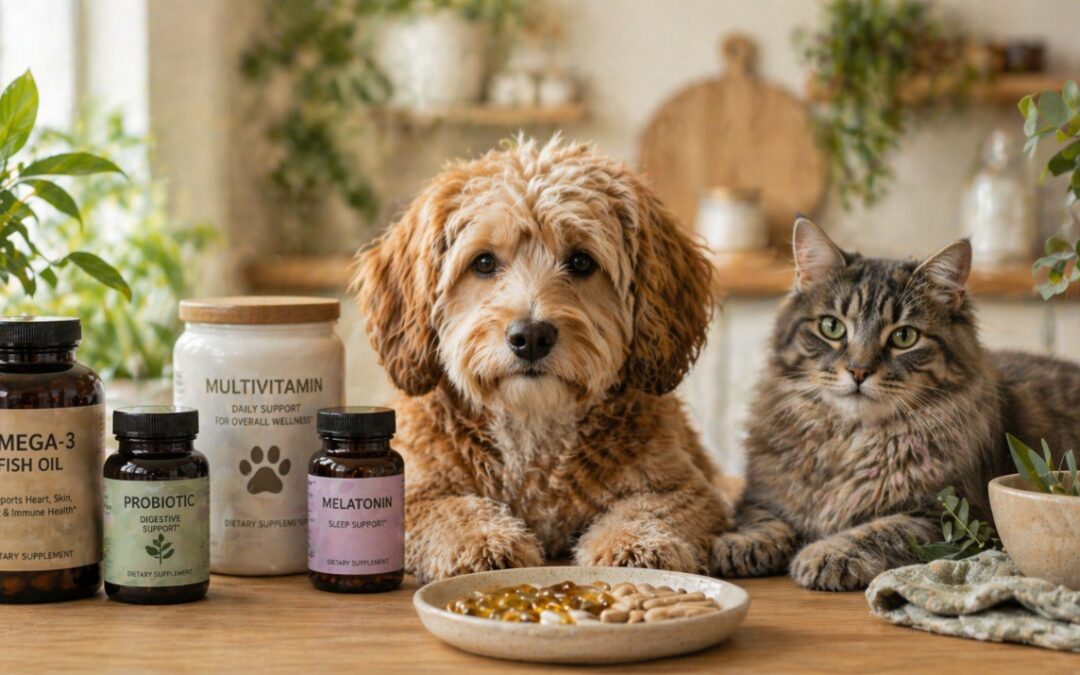
As interest in natural health continues to grow, many pet owners are looking for ways to support their animals using the same supplements they take themselves. On the surface, this seems reasonable. If a supplement is considered safe or beneficial for people, it is easy to assume it may offer similar benefits for pets.
However, that assumption does not always hold true. Dogs and cats process nutrients, medications, and plant-based compounds differently than humans, and those differences can significantly affect both safety and effectiveness.
One of the most important factors is metabolism. Species differences in liver enzyme activity influence how substances are absorbed, broken down, and eliminated from the body. Cats, in particular, have limited glucuronidation capacity, which makes them more susceptible to certain compounds that humans tolerate without issue [1]. As a result, substances that are safe at typical human doses may accumulate or cause toxicity in pets.
Dose is another major consideration. Human supplements are formulated based on human body weight and physiology, and the concentrations can vary widely between products. Simply giving a smaller portion of a human supplement does not reliably translate to a safe or effective dose for an animal. In many cases, appropriate dosing requires species-specific data, which is not always available for over-the-counter products [2].
Formulation also matters. Many human supplements contain additional ingredients such as flavorings, sweeteners, or preservatives that may not be appropriate for pets. One common example is xylitol, a sugar substitute frequently found in chewable vitamins, gummies, and powders. In dogs, xylitol can cause rapid insulin release, leading to hypoglycemia and, in some cases, acute liver injury [3].
Even when the primary ingredient itself is not inherently toxic, the intended use may not translate across species. For example, probiotics are widely used in both human and veterinary medicine, but the strains that are beneficial in humans are not always the same as those studied in dogs and cats. As a result, a human probiotic may not provide the intended benefit in a pet, even if it is not harmful [4].
Similarly, supplements such as melatonin or omega-3 fatty acids may be used in veterinary settings, but dosing, formulation, and clinical context are important. Fish oil products vary in concentration of EPA and DHA, and excess supplementation can contribute to unintended caloric intake or gastrointestinal upset if not properly balanced [5]. Melatonin may be used in certain cases, but products formulated for humans can include additional ingredients or inconsistent dosing that complicate use in animals.
Herbal products introduce an additional layer of complexity. Plants produce biologically active compounds that can have significant physiologic effects. While some herbs have demonstrated benefits, others may interact with medications, affect organ function, or lack sufficient safety data in companion animals. Because of this variability, herbal supplementation requires the same level of consideration as conventional medications.
There is some overlap between human and veterinary supplements, but it is not as simple as using the same product across species. Differences in dose, formulation, and species-specific physiology still need to be considered, even when an ingredient itself is not inherently harmful. For that reason, it is best to use products formulated specifically for pets or to consult with a veterinarian before use.
In practice, the issue is rarely that a supplement is inherently unsafe. More often, the concern is that the dose, formulation, or species-specific effects have not been accounted for. Well-intentioned attempts to support a pet’s health can lead to unintended consequences when these factors are overlooked.
Supplements can play a role in supporting health, but they are not interchangeable across species. Understanding those differences is key to using them safely and effectively.
When in doubt, it is always safest to consult with your veterinarian before adding a supplement to your pet’s routine.
References (APA 7)
- Court, M. H. (2013). Feline drug metabolism and disposition: Pharmacokinetic evidence for species differences and molecular mechanisms. Veterinary Clinics of North America: Small Animal Practice, 43(5), 1039–1054.
- Comblain, F., Sanchez, C., Lesponne, I., Serisier, S., Balligand, M., & Henrotin, Y. (2016). Review of dietary supplements for the management of osteoarthritis in dogs in comparison with human products. Frontiers in Veterinary Science, 3, 54. https://doi.org/10.3389/fvets.2016.00054
- Dunayer, E. K. (2006). New findings on the effects of xylitol ingestion in dogs. Veterinary Medicine, 101(12), 791–796.
- Suchodolski, J. S. (2016). Intestinal microbiota of dogs and cats: A bigger world than we thought. Veterinary Clinics of North America: Small Animal Practice, 46(1), 1–12.
- Freeman, L. M., Rush, J. E., & Kehayias, J. J. (2010). Nutritional alterations and the effect of fish oil supplementation in dogs. Journal of Veterinary Internal Medicine, 24(3), 573–580.