

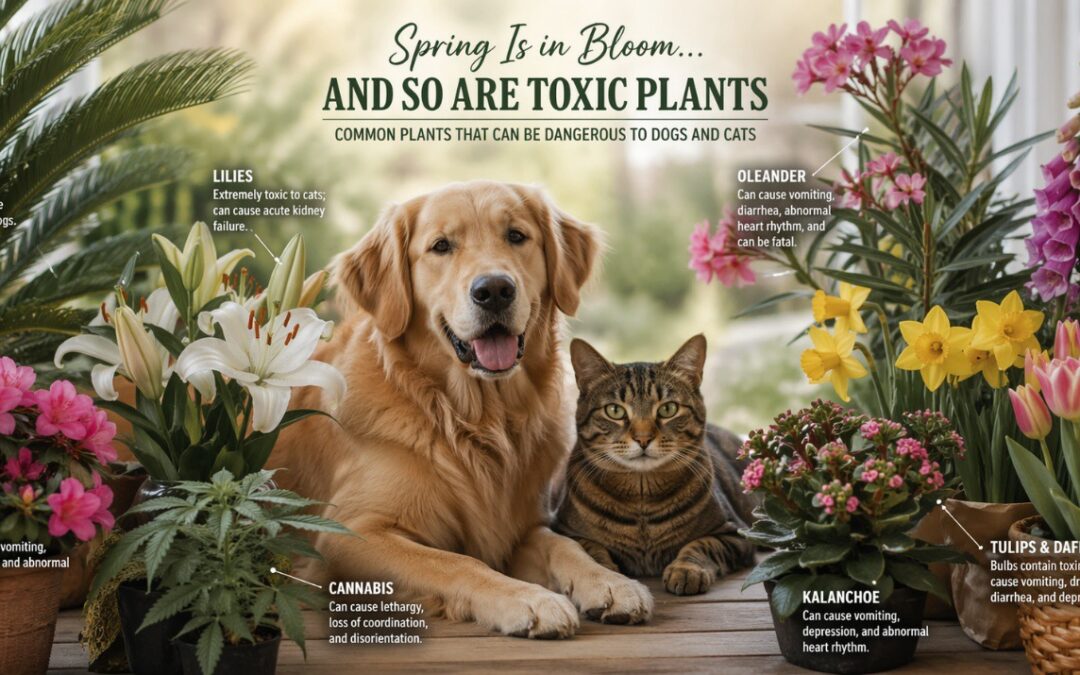
Spring is in bloom, and so are the risks for your pets. As plants begin to flower and outdoor activity increases, dogs and cats are more likely to come into contact with vegetation they would not typically encounter during other times of the year. At the same time, seasonal bouquets and ornamental plants are often brought indoors, creating additional opportunities for exposure within the home.
While it is difficult to keep track of every potentially toxic plant, a smaller group accounts for many of the exposures seen in clinical practice. Recognizing these more common toxicities is key for pet owners!
One of the most important to recognize is the Sago Palm, along with other members of the cycad family. These plants are commonly used in landscaping and decorative arrangements and are often perceived as low risk based on their appearance. However, all parts of the plant contain toxic compounds, with the seeds posing the greatest danger. In dogs, ingestion can result in severe liver injury, and even small amounts have been associated with acute liver failure and significant illness leading to death [1–3]. Because of the severity and potential for rapid progression, suspected exposure should be treated as an emergency rather than monitored at home.
Lilies represent another critical exposure, particularly in cats. These plants are frequently included in floral arrangements, especially during the spring, and are often present in the home without much concern. Unlike many other toxic plants, ingestion is not required for toxicity to occur. Pollen from lily flowers can adhere to a cat’s coat and be ingested during grooming, leading to acute kidney injury [1,4,5]. Early recognition and intervention are essential, as outcomes are closely tied to how quickly treatment is initiated.
Oleander is also commonly encountered, particularly in warmer regions where it is used as a landscaping plant. Oleander contains cardiac glycosides that interfere with normal cardiac function and can result in life-threatening arrhythmias if ingested [1,6].
Several widely planted ornamentals also contribute to frequent exposure cases. Azalea contains grayanotoxins that can cause vomiting, weakness, and cardiovascular abnormalities [1,6]. Tulip and Daffodil are also common during this time of year, with the highest concentration of toxin located in the bulb. As a result, pets that dig or ingest bulbs are at greater risk than those with only superficial contact [1,6].
Other plants, including Foxglove and Kalanchoe, contain compounds that affect cardiac function and should be considered more significant exposures rather than minor irritants [1,6].
In general, if your pet is chewing on or ingesting a plant and you are not sure what it is, it is always a good idea to take a photo. There are also apps that can help identify plants quickly, which can be helpful when you are trying to decide what to do next. Even when a plant is not highly toxic, mild gastrointestinal signs such as vomiting or diarrhea can still occur, so monitoring is important. More importantly, knowing exactly what your pet was exposed to allows your veterinarian to give you more accurate guidance. Pets should not be left unattended in areas where they have access to unknown plants, especially if they tend to chew or dig.
Exposure to Cannabis should also be considered, particularly as cannabis products become more accessible in home environments. Dogs and cats may develop neurologic signs including ataxia, lethargy, and altered mentation following ingestion [1,7]. While many cases are not life-threatening, the presentation can still be concerning and often requires veterinary input.
The severity of plant toxicity is influenced not only by the species of plant but also by the part consumed and the behavior of the animal. Casual contact or brief sniffing is unlikely to result in significant exposure, whereas chewing, digging, and ingestion of bulbs, seeds, or roots increases risk due to higher toxin concentrations [1,6].
If exposure is suspected, waiting for clinical signs to develop is not recommended. Early intervention improves outcomes, particularly for plants associated with organ toxicity such as sago palm and lilies. When possible, obtaining a photograph of the plant can assist with identification, and pet owners should contact their veterinarian or the ASPCA Animal Poison Control Center for guidance.
Knowing which plants are higher risk makes it easier to recognize a problem early and take action before it becomes more serious.
When in doubt, it is always safest to reach out to your veterinarian.
References:
- ASPCA Animal Poison Control Center. (n.d.). Toxic and non-toxic plants list. https://www.aspca.org/pet-care/animal-poison-control/toxic-and-non-toxic-plants
- Pet Poison Helpline. (n.d.). Sago palm toxicity in pets. https://www.petpoisonhelpline.com
- Cortinovis, C., & Caloni, F. (2016). Household food items toxic to dogs and cats. Frontiers in Veterinary Science, 3, 26. https://doi.org/10.3389/fvets.2016.00026
- FDA. (n.d.). Lilies and cats: A dangerous combination. https://www.fda.gov/animal-veterinary
- Hall, J. O. (2016). Veterinary toxicology (3rd ed.). Elsevier.
- Merck Veterinary Manual. (n.d.). Plant poisoning in animals. https://www.merckvetmanual.com
- Pet Poison Helpline. (n.d.). Marijuana toxicity in dogs and cats. https://www.petpoisonhelpline.com