

Imagine your metabolism as an engine. In your twenties, it runs like a finely tuned sports car, effortlessly shifting gears between burning the food you just ate and tapping into stored fat for energy. But as the miles add up, that transmission can start to slip. You might find it harder to skip a meal without crashing or notice your energy levels on a roller coaster throughout the day.
This shifting capability is the core of metabolic flexibility, the body’s ability to seamlessly adapt its fuel selection in response to demand. When you retain this flexibility as you age, you possess metabolic resilience. It is one of the most accurate indicators of how well you will age and how long you will live.
To understand how to protect this resilience, we must look beyond macro-level habits like calorie counting and zoom in on the cellular level, specifically examining how our cells process energy and how our cellular power plants, the mitochondria, maintain their efficiency.
The Golden Triangle: Flexibility, Mitochondria, and Lifespan
Metabolic resilience is built upon a three-way relationship connecting metabolic flexibility, mitochondrial efficiency, and overall lifespan.
When you are metabolically flexible, your body transitions between burning carbohydrates (glucose) and fats (lipids) without causing systemic stress. If you eat a carb-heavy meal, your pancreas secretes insulin, and your cells readily burn glucose. If you go several hours without food, your insulin levels drop, and your body shifts to lipolysis (breaking down fat) to generate energy.
This fuel switching happens entirely inside your mitochondria. When mitochondria are young and abundant, they generate energy cleanly, producing minimal cellular exhaust, known as reactive oxygen species (ROS).
As we age, a dangerous cycle can develop. If we constantly consume calories without periods of rest, our insulin levels remain elevated, locking the body into carbohydrate-burning mode. This constant overhead overworks the mitochondria. They become sluggish, structurally damaged, and leak high levels of ROS. This leakage triggers chronic, low-grade cellular inflammation, often termed “inflammaging”, which accelerates aging and degrades our healthspan.
Protecting your metabolic resilience requires a two-pronged strategy: optimizing your body’s biochemical signaling pathways to maintain fuel flexibility and directly repairing the structural integrity of your mitochondria.
Advanced Biochemical Support
Your basic healthy habits are important, but you can also use specific nutrients from plants to help boost your metabolism. New research has found certain plant-based ingredients that can help your body use energy more flexibly and help you manage your weight in a healthy way.
Incretin and Appetite Regulation: Dyglomera® & CQR-300®
Incretin and appetite regulation refer to the way certain hormones in your body help control how much you eat and how your body manages blood sugar. Incretins are a group of gut hormones, like GLP, that are released after you eat. They signal to your brain that you are full, slow the rate at which your stomach empties, and help your pancreas release insulin to keep blood sugar levels balanced. By influencing these hormones, your body can better manage hunger cues and energy use, supporting healthy weight management and metabolic health.
Two of the most innovative ingredients in metabolic health are Dyglomera® and CQR-300®.
Recent research has found that both botanical extracts help people manage their weight by safely altering hormone levels. They mainly work by increasing the amount of GLP-1 in your body. At the same time, they block DPP-4, an enzyme that would normally break down GLP-1. This means GLP-1 stays active longer. By keeping GLP-1 active longer, these extracts help reduce spontaneous caloric intake and support balanced fasting blood sugar and lipid profiles.
Liver and Lipids: Altilix®
Your liver is the primary regulator of metabolism. Altilix® is a specialized powder extract derived from the leaves of a specific Mediterranean artichoke cultivar. Rich in bioactive compounds such as cynarine, Altilix® helps protect the liver and supports balanced lipid levels. Research indicates it can improve the fatty liver index and lower triglycerides and LDL cholesterol, helping the liver process fats and carbs efficiently without becoming congested.
Glucose Control and Muscle Preservation: Fenuflakes® & Torabolic®
Maintaining muscle mass is vital for metabolic resilience because skeletal muscle is your body’s primary storage site for glucose. Two targeted ingredients derived from fenugreek seeds provide dual-action support:
- Fenuflakes® is a defatted, high-fiber fraction of fenugreek rich in galactomannan. Taken with meals, it forms a gel-like matrix in the digestive tract that slows carbohydrate absorption, preventing sharp spikes in blood sugar and insulin.
- Torabolic® is a specialized, standardized fenugreek extract designed to enhance muscle performance. Research shows that Torabolic® activates AMPK, an enzyme often called the body’s metabolic master switch. AMPK activation promotes muscle tissue to absorb glucose and burn fat, helping increase lean muscle mass and reduce body fat percentage during resistance training.
Powering the Cellular Engine: Mitochondrial Efficacy
Even with optimized hormonal signals, your metabolism will stall if your cellular power plants are structurally degraded. To maintain high energy output and low cellular inflammation as you age, you must support mitochondrial health using three foundational nutrients.
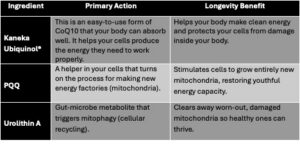
Think of Urolithin A and PQQ as a highly coordinated maintenance crew. Urolithin A identifies and dismantles the old, broken-down engines that are leaking inflammatory exhaust, while PQQ signals the cell to build brand-new, factory-fresh engines from scratch. Finally, Kaneka Ubiquinol® acts as the premium fuel that keeps those new engines running cleanly at peak performance.
The Lifestyle Triad: Daily Habits for Deep Resilience
No supplement protocol can completely override a lifestyle that works against your biology. To truly lock in metabolic resilience, you need to combine targeted nutritional support with consistent habits built around three pillars: diet, exercise, and spiritual well-being.
Dietary Design: Introducing Strategic Variance
To maintain metabolic flexibility, your body needs to practice using different fuel sources. If you consume processed carbohydrates every few hours from sunrise to midnight, your body loses the ability to burn fat.
- Time-Restricted Eating: Limit your food consumption to an 8-to-10-hour window (e.g., 10:00 AM to 6:00 PM). This gives your body a consistent 14- to 16-hour fasting window, allowing insulin levels to drop low enough to activate fat burning and trigger cellular cleanup.
- Whole-Food Nutrition: Prioritize lean proteins, healthy fats (such as olive oil and avocados), and fibrous vegetables. This combination delivers steady energy without causing erratic spikes in blood sugar.
Physical Training: The Dual-Engine Approach
To maximize metabolic health, your weekly exercise routine should target your muscles and metabolic systems in two distinct ways:
- Zone 2 Cardio (Mitochondrial Density): This is steady-state cardiovascular exercise performed at a moderate pace at which you can still hold a conversation (such as brisk walking, cycling, or rowing). Zone 2 training specifically stimulates your slow-twitch muscle fibers, which rely almost exclusively on fat for fuel, prompting your cells to build more mitochondria to handle the workload. Aim for 150 minutes per week.
- Resistance Training (Glucose Disposal): Lifting weights or doing bodyweight exercises builds and maintains skeletal muscle. Because muscle tissue stores glucose, having more lean muscle mass provides your body with a larger buffer to safely absorb carbohydrates, thereby significantly improving insulin sensitivity.
Stress Management and Spirituality: Lowering the Cortisol Overhead
Metabolism isn’t just driven by what you eat and how you move; it is deeply influenced by your nervous system. Chronic emotional and psychological stress keeps your body in a constant “fight-or-flight” state. This triggers a continuous release of the hormone cortisol, which signals your liver to release extra glucose into your bloodstream and promotes fat storage around your midsection.
Integrating spiritual practices, whether through structured meditation, deep breathing, quiet time in nature, or participation in a faith-based community, shifts your nervous system from sympathetic overload to a calm, parasympathetic state. This reduction in emotional stress lowers your baseline cortisol levels, reduces systemic inflammation, and allows your metabolic pathways to function as nature intended.
The Bottom Line
Metabolic resilience isn’t something you either have or don’t have; it is a dynamic capacity you build or diminish through your daily choices. By keeping your biological pathways flexible through smart nutritional choices, protecting your cellular powerhouses, and committing to supportive lifestyle habits, you can keep your metabolic engine running cleanly, efficiently, and vibrantly for decades to come.