

For many women entering perimenopause and menopause, the scale suddenly feels like it is working against them. Diet and exercise routines that worked reliably for decades suddenly yield different results, body composition shifts toward the midsection, and energy levels fluctuate unpredictably.
This isn’t a lack of willpower; it is a fundamental metabolic shift driven by changing hormone levels. Understanding the endocrinology of midlife allows us to look beyond simple “calories in vs. calories out” and target the underlying cellular mechanics with lifestyle adjustments and evidence-based nutritional science.
The Hormonal Pivot: Why Midlife Metabolism Shifts
As ovarian follicle activity declines, serum estradiol drops significantly. Estrogen is not merely a reproductive hormone; it is a critical master regulator of metabolic rate, insulin sensitivity, lipid distribution, and vascular function.
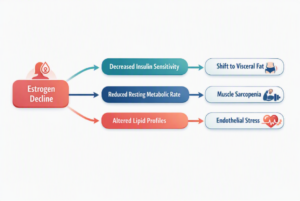
When estrogen levels drop, three primary metabolic shifts occur:
- More Belly Fat Storage:When estrogen drops, the body is more likely to store fat deep in the abdomen around the organs instead of under the skin. This helps explain why weight often shifts toward the midsection during menopause.
- Blood Sugar and Hunger Signals Change:Cells may not respond to insulin as well, which can lead to higher blood sugar. At the same time, leptin—the hormone that helps signal fullness—may become less effective, making appetite harder to regulate.
- Loss of Lean Muscle:Estrogen helps support muscle maintenance. As levels decline, women may lose muscle more easily, which can lower resting metabolism and make weight maintenance harder even without eating more.
Targeting Female Health & Hormones
To support healthy midlife transitions, botanicals must focus on easing vasomotor symptoms (hot flashes, night sweats), supporting endogenous hormone signaling, and restoring daily vitality.
Key Female Health Ingredients
- Shatavari: Rich in steroidal saponins (Shatavarins I–IV), Shatavari acts as a traditional female adaptogen. It gently interacts with estrogen receptors to help buffer hormonal fluctuations, support vaginal tissue elasticity, and reduce night sweats.
- Libifem®: A specialized fenugreek seed extract standardized to Fenuside™. Clinical studies demonstrate that Libifem® supports estradiol activity, leading to up to a 56% reduction in menopausal symptoms (hot flashes and night sweats) alongside improvements in female libido and sexual vitality.
- EstroG-100®: Exhibits selective estrogen receptor modulator (SERM)-like activity, offering relief from hot flashes and joint discomfort without impacting uterine or breast tissue dynamics.
Advanced Metabolic & Weight Management Science
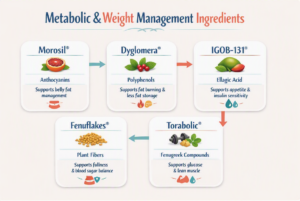
Addressing midlife weight changes requires a multi-target approach: stimulating fat breakdown (lipolysis), controlling blood glucose, enhancing satiety, and protecting muscle mass.
Cardiovascular & Vascular Support in Midlife
As estrogen declines, blood vessels lose some of their natural elasticity, and lipid profiles often shift toward higher LDL cholesterol and triglycerides. Cardiovascular health is an integral piece of the midlife metabolic equation.
- Bergavit®: Standardized flavonoids from Bergamot juice help maintain healthy blood lipid levels. Bergavit® inhibits key enzymes in cholesterol synthesis, supporting healthy LDL/HDL ratios and protecting vascular endothelial walls against oxidative stress.
Lifestyle Foundations for Menopause & Weight Management
Targeted nutraceuticals achieve optimal performance when combined with habits designed for midlife endocrine changes:
Progressive Resistance Training (PRT)
- The Goal:Protect muscle and help the body use blood sugar more effectively.
- Action:Do strength training 2–3 times per week, using exercises like squats, deadlifts, presses, or other movements that work several muscles at once. Building muscle helps your body use extra blood sugar and can support a healthier metabolism at rest.
Protein Prioritization & Fiber Support
- The Goal:Get enough protein to help maintain muscle as you age and enough fiber to support digestion and gut health.
- Action:Aim for 2–1.6 grams of protein per kilogram of body weight each day. Spread protein throughout the day, with about 25–30 grams at each meal, to better support muscle repair and maintenance. Also aim for 25–35 grams of fiber daily from foods like chia, oats, vegetables, beans, or fiber ingredients such as Fenuflakes® to help you feel full and support steady blood sugar.
Circadian Optimization & Sleep Quality
- The Goal:Support better sleep and help keep hunger, fullness, and stress hormones more balanced.
- Action:Keep your bedroom cool, around 65–68°F / 18–20°C, to help reduce sleep disruptions from night sweats. Try to get 10–15 minutes of natural sunlight within an hour of waking to help set your body’s internal clock and support better sleep at night.
HPA-Axis & Stress Management
- The Goal:Manage stress so high cortisol levels are less likely to contribute to belly fat storage.
- Action:When stress stays high for too long, cortisol can remain elevated and may encourage fat storage around the abdomen. Add 5–10 minutes a day of simple stress-reducing habits, such as deep breathing, a walk outside, gentle stretching, or quiet rest.
The Bottom Line
Menopause and midlife weight changes reflect evolving biology, not personal failure. By combining lifestyle strategies—like resistance training, adequate protein, and circadian alignment—with targeted botanicals, women can support their hormone transition and maintain long-term metabolic vitality.