


Have you ever experienced a mid-afternoon slump when your brain feels like it’s wading through thick fog? Or noticed that on days when your digestion feels heavy and sluggish, your motivation completely tanks? It turns out these moments aren’t separate issues. They are deeply interconnected through a single, elegant biological pathway: the relationship among mitochondria, metabolism, and mental energy.
Understanding how this trio works together reveals the secret to sustained focus, metabolic flexibility, and daily resilience.
Connecting the Trio: How Your Cellular Power Plants Fuel Your Mind
To understand how you feel daily, it helps to look inside your cells.
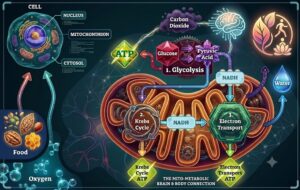
Mitochondria: The Micro-Power Plants
Mitochondria are tiny structures found inside almost every cell in your body. A simple way to think of them is as your cells’ “power plants.” They take fuel from the food you eat, especially carbohydrates and fats, and combine it with the oxygen you breathe to make adenosine triphosphate (ATP). ATP is often called the body’s energy currency because cells “spend” it to do their jobs, much like money is used to pay for work. Your muscles use ATP to move, your heart uses it to beat, and your brain uses it to think, focus, remember, and regulate mood. When mitochondria are working well, your cells can make steady energy. When they are stressed, damaged, or under-fueled, ATP production can drop, which may show up as fatigue, brain fog, low motivation, or reduced stamina.
Metabolism: The Energy Processing Highway
Metabolism is the body’s overall system for turning food into usable energy and building materials. It is not just about “burning calories” or body weight; it includes thousands of chemical reactions that happen all day, even while you sleep. After you eat, digestion breaks food into smaller parts: carbohydrates become glucose, fats become fatty acids, and proteins become amino acids. Your bloodstream carries these nutrients to your cells, where they can be used right away for energy, stored for later, or used to repair and build tissues. Mitochondria depend on this steady supply of fuel to make ATP, the energy molecule your cells use to function. When metabolism is balanced, fuel reaches the mitochondria in a smooth, reliable way, helping support steady energy, clear thinking, and fewer crashes. When metabolism is strained, such as after highly processed meals, blood sugar swings, poor sleep, or chronic stress, the fuel supply can become uneven, making the mitochondria work less efficiently and leaving the brain and body feeling sluggish.
Mental Energy: The High-Demand Consumer
Although the human brain accounts for only about 2% of total body weight, it consumes roughly 20% of the body’s total energy. Brain cells (neurons) are packed with dense networks of mitochondria to support rapid-fire communication, focus, memory, and emotional regulation.
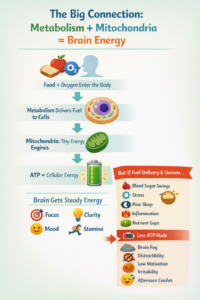
The Big Connection is that your brain depends on a steady supply of cellular energy every minute of the day. Think of your metabolism as the fuel delivery system and your mitochondria as the engines that turn that fuel into usable power. When metabolism is working well, nutrients from food move smoothly into the cells, oxygen is available, and the mitochondria can produce enough ATP to keep the brain alert, focused, and emotionally steady. But when metabolism slows down or becomes uneven, such as during blood sugar swings, stress, poor sleep, inflammation, or nutrient gaps, the mitochondria may not receive the right fuel at the right time. If those mitochondria are also under stress, they cannot make ATP as efficiently. Because the brain uses so much energy compared with its size, it is often one of the first places you feel the effects. Instead of clear thinking and steady motivation, you may notice brain fog, distractibility, low drive, irritability, or that familiar mid-afternoon mental crash. In simple terms, when the body’s energy system struggles, the brain feels it quickly. Supporting mitochondrial health and balanced metabolism helps restore the steady energy supply your brain needs for mental clarity, focus, and stamina.
This image may make this process easier to understand:
Targeted Nutrients: Fueling the Mitochondrial & Metabolic Engine
Formulating targeted nutrition strategies requires looking at ingredients that optimize energy production, support metabolic pathways, and shield cells from oxidative stress.
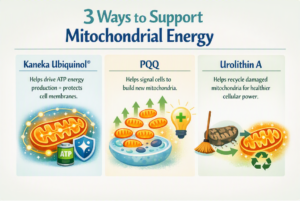
Direct Mitochondrial & Cellular Energy Support
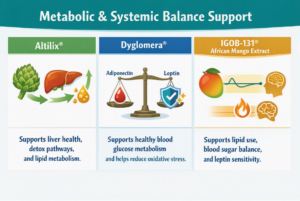
Metabolic & Systemic Balance Support
Cognitive & Mental Energy Support
- Bacopa (Bacopa monnieri): A foundational adaptogenic herb that supports neurotransmitter balance (specifically acetylcholine) and provides neuroprotective antioxidant defense. Bacopa helps reduce mental fatigue, improves memory retention, and keeps cognitive function steady under stress.
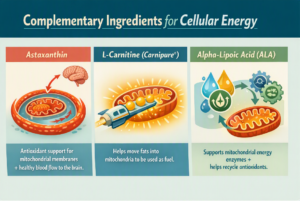
Complementary Ingredients
Lifestyle Strategies for Whole-Person Energy
Supplements work best when built on a solid foundation. Integrating daily practices across Diet, Exercise, and Spirituality keeps your metabolic engine running cleanly.
Diet: Fueling Clean Cellular Burn
- Prioritize Whole, Unprocessed Foods: Focus on nutrient-dense foods rich in polyphenols, clean proteins, and healthy fats (like wild seafood, avocados, and extra virgin olive oil) to provide steady fuel without steep insulin spikes.
- Incorporate Intermittent Digest Rest: Giving your digestive system a 12-to-14-hour break overnight allows your body to downregulate insulin and activate cellular cleanup processes like autophagy.
- Hydrate with Electrolytes: Cellular energy processes require minerals like magnesium and potassium. Keep hydrated throughout the day with filtered water and natural electrolytes.
Exercise: Stimulating Mitochondrial Growth
- Zone 2 Cardio Training: Moderate, conversational-pace endurance exercise (like steady brisk walking or light cycling) specifically targets slow-twitch muscle fibers, stimulating your cells to build larger, more efficient mitochondrial networks.
- Short Bursts of Resistance Training: Lifting weights or doing bodyweight exercises improves insulin sensitivity in skeletal muscle, allowing for more efficient glucose clearance and better metabolic health.
- Post-Meal Walks: A brief 10-to-15-minute walk after lunch or dinner encourages muscle tissue to absorb glucose without triggering high insulin demands.
Spirituality: Lowering Stress to Protect Energy
- Morning Mindful Grounding: Chronic psychological stress floods the body with cortisol, which over time damages delicate mitochondrial membranes. Spend 5 to 10 minutes each morning in quiet reflection, journaling, or practicing breathwork to calm the nervous system.
- Nature Connection: Spending dedicated time outdoors lowers sympathetic (“fight-or-flight”) drive and replenishes depleted mental energy reserves.
- Cultivate Daily Gratitude & Purpose: Feeling connected to a clear sense of purpose fosters inner peace and emotional resilience, conserving energy that would otherwise be wasted on anxiety.
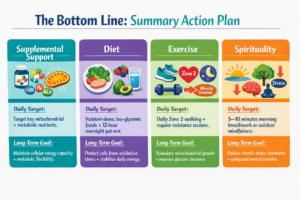
By addressing energy at its root—protecting the mitochondria, balancing metabolism, and nurturing the mind—you build a sustainable foundation for vibrant daily health and sharp mental focus.