

by Justin Kalafat
Creatine has come a long way from its traditional home in the weight room. For years, it was largely associated with bodybuilders, strength athletes, and people looking to improve their gym performance. Today, that audience is much broader. Creatine is showing up in conversations around muscle health, exercise recovery, healthy aging, and even cognitive health.
There is plenty of science behind the ingredient. Creatine monohydrate is one of the most extensively studied supplements in sports nutrition. Research has consistently shown that it can increase muscle creatine stores, support high-intensity exercise performance, and, when paired with resistance training, contribute to improvements in strength and muscle mass.
So where does the category go from here?
For supplement companies, the question is becoming less about whether to include creatine and more about what else to include alongside it to create a better, more differentiated product.
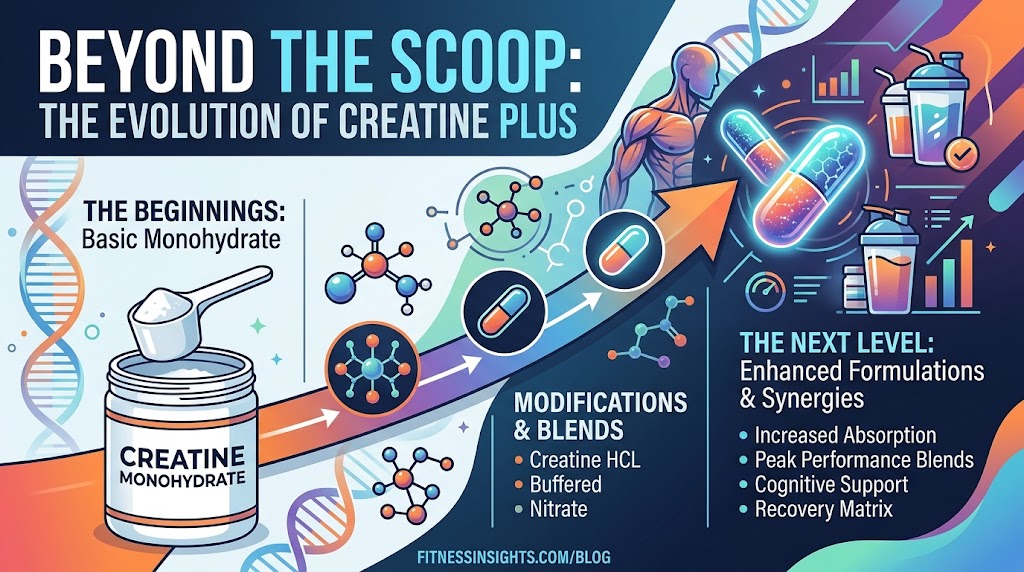
From Basic Creatine to More Complete Formulas
The traditional creatine product is simple: deliver an effective dose of creatine monohydrate and let the ingredient do the work. There’s nothing wrong with that approach. Creatine monohydrate remains the benchmark for a reason.
But the market has changed. There are now countless creatine products competing for the same consumer. As the category becomes more crowded, simply offering another creatine powder makes it harder for a brand to stand out.
That’s where combination formulas become interesting. Rather than treating creatine as the entire product, formulators can use it as the foundation and add ingredients that address other parts of the training experience — from muscle support and performance to recovery and resilience.
The goal shouldn’t be to create a complicated label just for the sake of having more ingredients. The better approach is to select ingredients with a clear purpose and a credible body of research supporting them. Simple additions like fiber to alleviate consumer feedback on bloating, or just to get more fiber in the diet, along with electrolyte blends, or flavorings can separate the formulations from others.
There are two other branded ingredients that fit well into this discussion, which a brand can easily use to capture consumers’ attention through storytelling.
BIOCREAT®: Building on the Creatine Foundation
BIOCREAT® ® is a proprietary fenugreek-derived ingredient that has been studied in combination with creatine.
In an eight-week, double-blind controlled study involving 47 resistance-trained men, participants taking BIOCREAT® with creatine showed improvements in lean mass and bench-press strength compared with placebo. The study also found greater improvement in Wingate peak power at four weeks in the BIOCREAT® group. That’s interesting from a formulation perspective.
The research doesn’t mean that BIOCREAT® makes creatine universally more effective, and that isn’t the claim that should be made. What the study does provide is human clinical evidence supporting the use of BIOCREAT® alongside creatine in a resistance-training population. For formulators, that’s an important distinction. Instead of simply adding another ingredient to a creatine product, BIOCREAT® offers the opportunity to build a more specific story around muscle and performance support.
In other words, the conversation shifts from “How much creatine is in the product?” to “What does the overall formula bring to the consumer?”
ReDaxinTM™: Adding Recovery to the Equation
The other side of the training equation is recovery. You can train harder and build strength, but if you’re constantly dealing with soreness and slow recovery, it’s difficult to maintain consistent training. That’s why recovery has become such an important part of sports nutrition.
ReDaxinTM is a proprietary extract derived from red sorghum. It is rich in polyphenols, including 3-deoxyanthocyanidins, and has been developed for sports nutrition and recovery applications. Its clinical research makes it particularly interesting as a potential companion to creatine.
In a randomized, double-blind, placebo-controlled study involving 29 men, researchers examined daily ReDaxinTMsupplementation at doses of 250 mg and 500 mg in conjunction with a strenuous exercise protocol designed to induce muscle damage. The study found evidence of faster recovery of muscle strength compared with placebo, along with reductions in muscle soreness during the recovery period. Not every measure showed a significant difference, however, which is important context when interpreting the results.
Still, the research gives ReDaxinTM a compelling place in a broader creatine formulation. Creatine is already well known for its connection to strength, power, training performance, and muscle development. ReDaxinTM brings a different angle to the formula — recovery and muscle resilience.
Put those concepts together and you start to get a much more complete product story: Train. Perform. Recover. Repeat. That’s a different proposition from simply putting another creatine product on the shelf.
Why the “Creatine Plus” Approach Makes Sense
The rise of creatine is part of a broader shift in the supplement industry. Consumers are paying closer attention to individual ingredients, reviewing research, and expecting more from the products they buy. That doesn’t necessarily mean they want more ingredients. They want better reasons to buy the product.
Creatine has already established itself as a category leader. The next opportunity may be figuring out what you can build around it.
BIOCREAT® and ReDaxinTM are good examples of how that can work. BIOCREAT® brings clinical research involving creatine and resistance training, while ReDaxinTM adds a clinically studied recovery component. Neither ingredient needs to replace creatine, instead, each can potentially expand the story around it.
Disclaimer: These statements reflect my personal opinions and do not represent the