

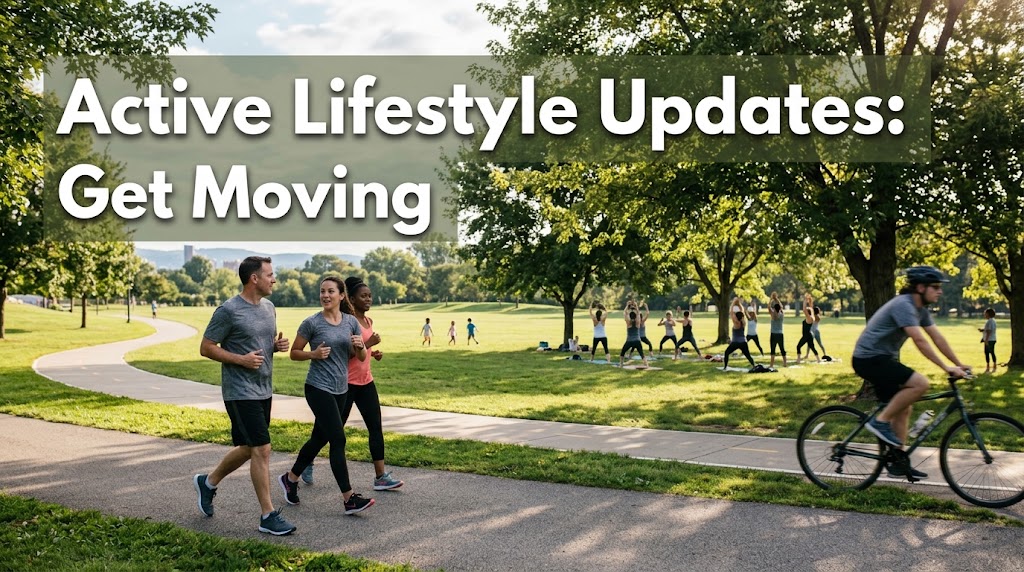
An active lifestyle can look different for everyone. For an athlete, it might mean improving workout performance, speed, strength, or mental well-being. For an older adult, it may mean moving more comfortably, easing pain, or enjoying a better quality of life. No matter your current activity level, this blog offers practical advice to help you become more active and make progress.
Getting back your fitness level
When we look at getting back on track with our fitness level, there are several areas in which we need to place our attention:
- Set Reasonable Goals
- Pre-Workout Support
- Recovery
- Rebuild
Setting Reasonable Goals
The first of these four areas involves no supplements and is a critical step in avoiding failure to get back in shape. If you look at my blog from a few years ago, you will find details on setting and achieving your goals. The simple steps are:
- Define your goal
- Outline the steps needed
- Set a timeline
- Ask for Help
- Consider possible delays or roadblocks
- Reward yourself
- Put it in writing
- GO!
- Don’t give up!
Setting and following your goals will give you the support you need to get back into your active lifestyle.
Pre-Workout Support
While many fitness experts may have a very different list of supplements, I am trying to keep this simple, and it is not intended for a high-level athlete. Pre-workout supplements should be consumed primarily to improve your energy, reduce workout fatigue, and reduce soreness. Here is a quick list of supplements to consider:
Adaptogens- If you aren’t familiar with the term, an adaptogen is an ingredient (usually a botanical) that helps your body adapt to physical or mental stressors. In our example, two specific adaptogens are best: Rhodiola and Ashwagandha. Clinical studies suggest that ashwagandha may help improve upper- and lower-body strength, support post-workout recovery, reduce muscle soreness, enhance endurance, decrease knee swelling, and promote joint function. Research also indicates that rhodiola may support sustained energy and faster recovery while helping reduce fatigue caused by prolonged or mild physical exertion.
Antioxidants- Exercise naturally produces free radicals, which can stress muscles and may contribute to tiredness and slower recovery. Antioxidants help the body manage these compounds and support an active lifestyle. CaroRite® provides a blend of carotenoids that helps protect cells from oxidative stress. Kaneka Ubiquinol® supports the body’s natural energy production and helps maintain heart health. Astaxanthin may help support endurance, muscle comfort, and recovery after exercise. CurcuVail® is a highly absorbable form of curcumin that can help support joint comfort and mobility. Together, these ingredients offer well-rounded support for energy, recovery, and staying active.
Energy Support- I recommend four non-caffeinated supplements that can support energy without the caffeine buzz: PQQ, Kaneka Ubiquinol®, AktiveX®, and Carnipure®. PQQ helps support the mitochondria, the energy-producing centers in your cells. Kaneka Ubiquinol® supports the body’s natural energy production, while AktiveX® supports energy and physical performance. Carnipure® may also help improve energy, reduce muscle fatigue and soreness, and support fat metabolism. Together, these four ingredients can provide well-rounded support before a workout.
While discussing energy, consider adding more protein, fats (Essential Fatty Acids like Omega-3s), and complex carbohydrates to your diet. These will help give your body the fuel it needs to burn during your activity.
Decrease Soreness- Two ingredients come to mind immediately because I recently wrote about them in blogs. The first is PEA, or Levagen®+. PEA (Palmitoylethanolamide) has a dual mechanism of action that helps enhance muscle regeneration, and it is clinically proven to address exercise-induced inflammation. The most bioavailable form of PEA is Levagen®+ (the brand of PEA I take). Because PEA supports muscle regeneration (repair and production), it can be essential as you increase your exercise. Additionally, reducing exercise-induced inflammation can help you recover faster and feel less sore.
Other ingredients that may help with muscle soreness include tart cherry extract and branched-chain amino acids (BCAAs). Tart cherry extract provides natural plant compounds that can support muscle comfort and recovery after exercise. BCAAs supply key amino acids the body uses to repair and rebuild muscle tissue, which may help reduce soreness after a challenging workout. Together, these ingredients can support recovery and make it easier to stay consistent as you become more active.
Recovery
Recovery helps your body prepare for the next workout. A well-rounded approach can include ingredients that support muscle repair, strength, comfort, hydration, and the body’s response to exercise. Torabolic®, Q-Actin®, ReDaxin™, branched-chain amino acids (BCAAs), and L-glutamine can form the foundation of this support, while tart cherry extract, magnesium, electrolytes, and omega-3 fatty acids may provide additional benefits.
Torabolic® and Q-Actin®— Torabolic® is a standardized fenugreek extract that can support strength, exercise performance, and post-workout recovery. Q-Actin® is a botanical ingredient that may help support physical performance, muscle comfort, and mobility. Together, they can help active adults maintain strength and recover more comfortably.
ReDaxin™— ReDaxin™ is a polyphenol-rich extract from red sorghum leaves. Research suggests it may help reduce muscle soreness and support faster strength recovery after challenging exercise, making it a useful addition to a post-workout routine.
BCAAs— BCAAs provide three essential amino acids that muscles use during exercise and recovery. Getting enough of these amino acids may help support muscle repair, reduce exercise-related soreness, and protect lean muscle, especially when training is challenging or dietary protein intake is low.
L-glutamine— L-glutamine is an amino acid involved in many recovery processes. It may support muscle tissue after strenuous activity, replenish glutamine depleted during demanding exercise, and support immune and digestive health during intense training.
Additional recovery support—Magnesium and electrolytes help maintain normal muscle function and replace minerals lost through sweat. Adequate protein, carbohydrates, fluids, sleep, and rest days remain essential because supplements work best as part of a complete recovery plan.
The Bottom Line: Where do you go from here?
Wherever you are in your activity levels, this blog will help you get back on track or improve your current workouts. Set your goals, follow through, and add the critical supplements mentioned above to build an active lifestyle and avoid pitfalls such as fatigue, injury, and muscle loss. Let’s take a proactive role in our lifestyle. We will improve in many other areas of our lives, including immune health, mental health, cardiovascular health, bone health, blood sugar levels, and cognitive function, and we will experience increased energy. So get out there and start moving!