

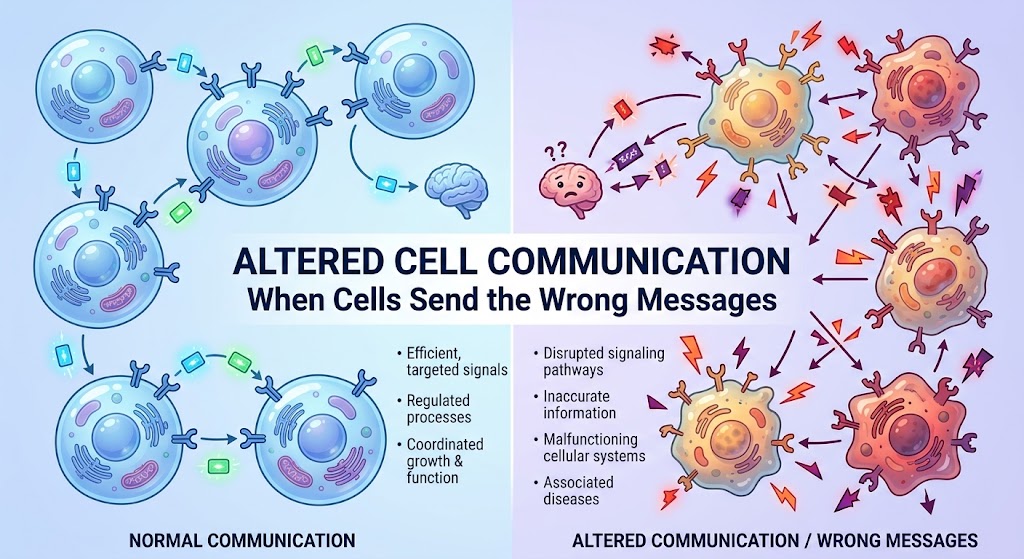
Your cells are constantly having conversations. They send chemical messages that help your body decide when to grow, repair damaged tissue, use energy, rest, or defend itself. When those messages arrive at the right time and cells respond appropriately, your body works as a coordinated team.
As we age, that coordination can become less reliable. Scientists call this altered intercellular communication, meaning changes in how cells communicate with one another.
Imagine running a company where urgent emails never reach the right department, routine requests trigger emergency meetings, and the maintenance team misses its instructions. Work slows down, resources get wasted, and problems accumulate.
Something similar can happen inside the aging body.
What Happens When Messages Get Mixed Up?
Aging can alter both the messages cells send and how other cells respond. Some signals become too persistent, while others weaken.
Senescent cells are one example. These cells no longer divide, but they remain in the body and can release substances that affect nearby cells. As they build up, they may create an environment where healthy tissue works less efficiently.
This can lead to:
- Mixed messages: Cells respond less accurately to signals that guide normal activity.
- Overactive alarm signals: Inflammatory messages continue after they are no longer needed.
- Weaker repair coordination: Signals that help maintain tissue become disrupted.
These shifts help explain why researchers view communication among cells and organs as an important part of aging.
Inflammation: When the Alarm Keeps Ringing
Inflammation is part of the body’s defense and repair system. After an injury or infection, it helps launch the response you need. Problems can arise when that activity does not settle down. This chronic, low-grade inflammation linked with aging is often called inflammaging, and researchers are studying how it develops and how it may contribute to age-related changes.
Think of it like an office alarm that keeps going off. People may keep working, but the constant disruption makes coordination harder.
The goal is to support an inflammatory response that turns on when needed and quiets down afterward.
Support the Environment Your Cells Work In
You cannot control every aspect of aging, but you can build daily habits that support overall health:
- Eat a varied, nutrient-rich diet. Make vegetables, fruit, beans, whole grains, nuts, and appropriate protein sources regular features of your meals.
- Move consistently. Include walking or other aerobic activity alongside strength exercises suited to your abilities.
- Prioritize sleep. Give yourself a regular opportunity for adequate, restorative rest.
- Make room for recovery. Use manageable practices such as breathing exercises, time outdoors, or relaxing activities.
- Pay attention to metabolic health. Work with your healthcare provider to manage blood sugar, blood pressure, and cholesterol when needed.
These habits provide a practical foundation for healthy aging. Supplements can help address specific needs, but they can’t replace that foundation.
Key Supplements to Consider
The most useful supplement choices depend on your diet, health conditions, and medications. No supplement has been proven to reverse age-related changes in communication between cells. The options below may support relevant functions or fill nutritional gaps.
Omega-3 Fatty Acids: Support for Cell Membranes and Body-Calming Signals
The omega-3 fats EPA and DHA help form cell membranes and are used to make compounds that help regulate irritation and swelling in the body. Because these nutrients are fat-soluble, delivery technologies such as AquaCelle® may help them disperse more effectively and support absorption. This makes omega-3s relevant to cell communication, but it does not mean taking them can fix age-related changes in cell signals.
Magnesium: Support for Normal Metabolic Function
Magnesium is involved in hundreds of enzyme systems, including those that help with energy production, blood sugar control, and nerve and muscle function. Getting enough supports these normal processes, but taking extra magnesium is not a proven way to correct age-related signaling problems.
Vitamin D: Address a Shortfall When Needed
Vitamin D supports immune health, muscle function, and nerve signaling. A supplement may help when your intake or vitamin D level is low, but taking more than you need has not been shown to improve cell communication or broadly prevent age-related health challenges.
Curcumin: A More Tentative Option
Curcumin, a compound found in turmeric, has attracted attention for its effects on body pathways tied to irritation and swelling. Because curcumin can be difficult for the body to absorb, delivery technologies such as HydroCurc™ and LipiSperse® may help it disperse more effectively and support uptake. However, the evidence is not strong enough to say that turmeric or curcumin supplements provide broad health benefits or correct age-related cell communication.
CaroRite®: Mixed Carotenoids for Eye, Skin, and Cell Protection
CaroRite® is a blend of plant pigments called carotenoids, including lutein, zeaxanthin, alpha-carotene, beta-carotene, and lycopene. These nutrients help the body manage everyday wear and tear from unstable molecules, while also supporting eye health, skin resilience, and normal cell function. This makes CaroRite® relevant to healthy aging, but it does not mean it can reverse age-related changes in cell communication.
Kaneka Ubiquinol®: Support for Cellular Energy
Kaneka Ubiquinol® is the reduced form of CoQ10, a compound your body uses in the mitochondria to help make cellular energy. It also helps protect fat-rich parts of cells from everyday wear and tear. Because the body’s ability to make and use CoQ10 can change with age, ubiquinol may be useful for supporting energy-related cell function.
The Bottom Line: Give Your Cells a Healthier Workplace
Healthy aging depends partly on how well your body coordinates its many moving parts. Clear cellular communication is one piece of that larger picture. Start with consistent habits, address nutritional gaps thoughtfully, and choose supplements for a defined purpose. Like a well-run company, your body benefits from good resources, reliable routines, and an environment where its teams can work together.