

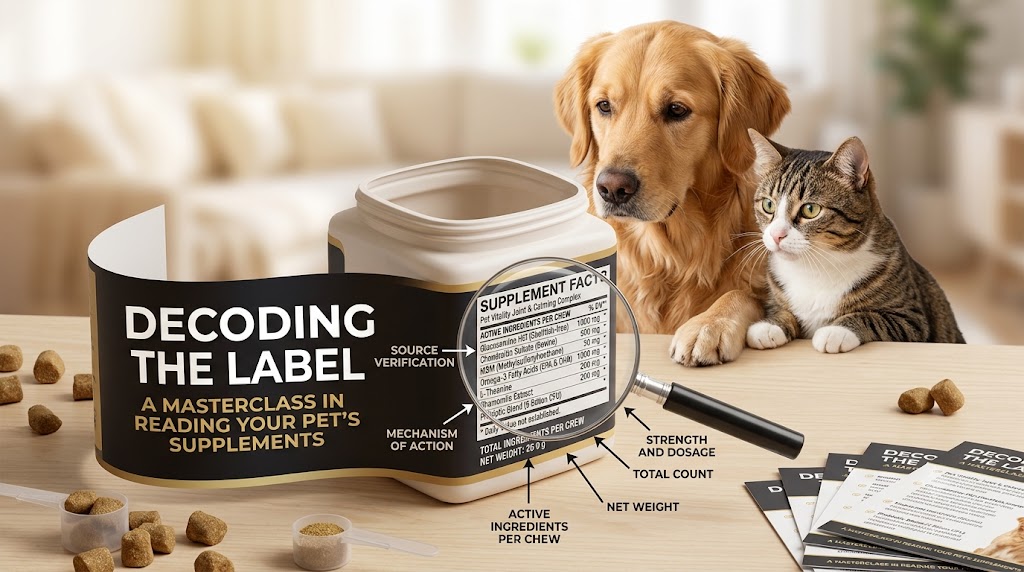
Walking down the pet aisle can be overwhelming. Every bottle promises a shinier coat, more “pep in the step,” or “miraculous” joint relief. But as a pharmacist, I’ve learned that the most important information isn’t on the flashy front of the bottle: it’s tucked away in the fine print on the back.
To ensure you are giving your pet a high-quality product that is both safe and effective, you need to know how to decode the label. Here is your masterclass in pet supplement quality control.
Look for the “Gold Standard”: The NASC Quality Seal
In the human supplement world, we look for third-party certifications like USP or NSF. In the pet world, the “Gold Standard” is the NASC (National Animal Supplement Council) Quality Seal.
- What it is: The NASC is a non-profit industry group that holds manufacturers to strict standards.
- Why it matters: When you see that yellow and black seal, it means the company has passed a comprehensive facility audit and maintains rigorous quality control standards. They are required to have a system for tracking adverse events and must provide consistent labeling.
- The Pharmacist’s Take: If a bottle doesn’t have the NASC seal, I’m immediately skeptical. It’s the easiest way to separate “basement blenders” from professional-grade manufacturers.
Mastering the “Guaranteed Analysis”
Unlike human supplements, which use a “Supplement Facts” panel, pet products often use a Guaranteed Analysis. This is where the science happens.
- Active Ingredients: These should be listed with their specific milligram (mg) or unit strength per chew or scoop. If a brand says “Proprietary Blend” without listing the actual amounts of each herb or nutrient, it might be “window dressing,” adding just a tiny, ineffective dusting of an ingredient to put it on the label.
- Inactive Ingredients: Do not skip this section! This is where hidden sugars, artificial colors, and potential allergens (like corn or soy) can be found.
- AAFCO vs. NASC: You may see AAFCO (Association of American Feed Control Officials) mentioned. AAFCO sets the standards for pet food nutrition. Supplements fall into a different category, which is why the NASC seal is the more relevant marker for your “Column 4” (Supplements) health goals.
Spotting the “Red Flags”
If a label sounds like it was written by a miracle-worker rather than a scientist, put it back on the shelf. In both human and animal medicine, there are strict rules about the claims a supplement can make.
- The “Cure” Trap: Supplements are intended to support structure and function, not to treat, cure, or prevent disease. If a label claims to “Cure Cancer,” “Eliminate Heart Disease,” or “Reverse Kidney Failure,” it is not only a red flag, it’s illegal.
- Vague Superlatives: Be wary of terms like “Doctor Recommended” or “Clinically Proven” without a clear reference to a peer-reviewed study or a specific professional backing.
- Missing Contact Info: A reputable company wants to hear from you. If there is no physical address or phone number for the manufacturer on the bottle, they aren’t interested in accountability.
The Bottom Line
Don’t be swayed by a cute puppy on the packaging. Your pet’s health depends on the chemistry inside the bottle. By looking for the NASC seal, verifying the Guaranteed Analysis, and steering clear of miracle claims, you are acting as your pet’s ultimate health advocate.
The Pro Tip: Next time you go to the vet, bring the bottle with the NASC seal visible. It tells your vet you are serious about quality, making it much easier for them to “partner” with you on your pet’s wellness plan.