

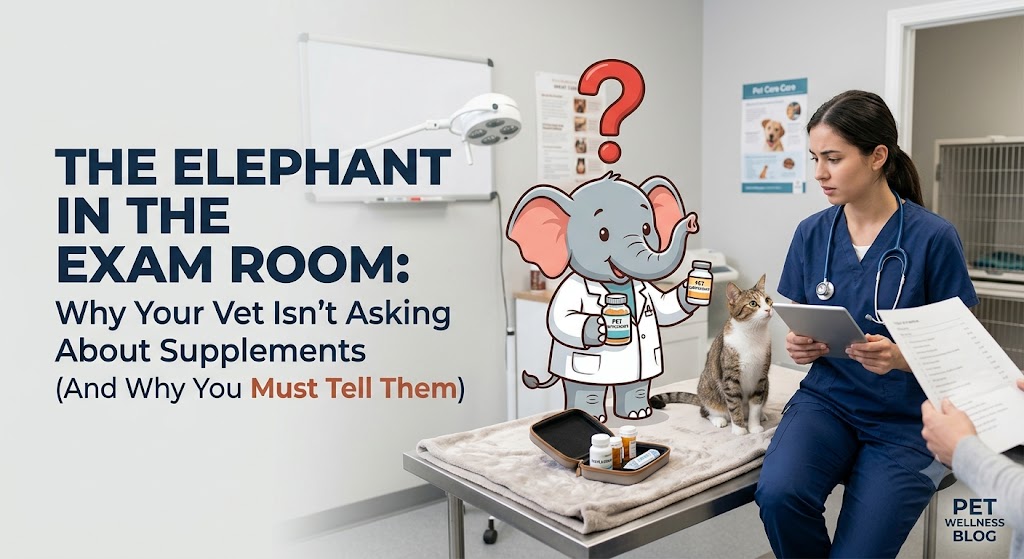
If you’ve walked into a veterinary clinic lately, the routine is likely familiar: a weight check, a quick listen to the heart, a look at the teeth, and the standard question, “Is he/she on any medications?” Most pet parents answer “No,” forgetting the joint chew, the calming hemp oil, or the multivitamin they added to the breakfast bowl that morning. Here’s the problem: Most veterinarians don’t explicitly ask about supplements. This silence creates a dangerous “knowledge gap” in the exam room. As a pharmacist, I believe it’s time we address this elephant in the room. Being proactive about your pet’s supplements isn’t just a lifestyle choice; it’s a safety necessity.
The “Knowledge Gap”: Why Your Vet Stays Silent
It’s easy to assume that because a vet is a medical professional, they are experts in everything your pet consumes. However, veterinary education often focuses on acute symptoms, infectious diseases, and surgery.
- Curriculum Focus: Many veterinary schools offer limited hours on clinical nutrition and even fewer on herbalism or botanical medicine.
- The “Standard of Care”: Vets are trained to prioritize FDA-approved pharmaceuticals and standard preventives (such as heartworm and flea medication).
- Time Constraints: In a 15-minute appointment, a vet is scanning for immediate red flags. If you don’t mention the supplement, they may assume it doesn’t exist.
By speaking up, you aren’t challenging their expertise; you’re providing the missing pieces of your pet’s biological puzzle.
The “Natural vs. Safe” Fallacy
The most dangerous phrase in pet health is: “It’s natural, so it can’t hurt.” As a pharmacist, I see the “Natural vs. Safe” conflict every day. Just because a botanical is “human-grade” or “organic” does not mean it is metabolically safe for a dog, cat, or horse.
- The Xylitol Danger: Many human-grade gummy vitamins or “natural” peanut butters use Xylitol as a sweetener. While safe for us, it is highly toxic to dogs, causing rapid insulin release and liver failure.
- Metabolic Differences: For example, a cat’s liver lacks certain enzymes needed to process essential oils or phenolic compounds that a human, or even a dog, can handle easily.
- The Interaction Risk: Supplements can alter how a prescription drug works. A “natural” anti-inflammatory could cause a stomach ulcer if combined with a steroid your vet prescribed.
Turning Your Vet into a Lifestyle Partner
Your vet shouldn’t just be the person you see when your pet is sick. To achieve true wellness, you want your vet to be a partner in your pet’s Diet, Exercise, and Supplements. When you proactively disclose supplement use, you shift the relationship from reactive to collaborative.
How to start the conversation:
“I’ve integrated a few supplements into [Pet’s Name]’s routine to support their joints and gut health. I have the labels here. Can we review these to ensure they don’t interfere with their annual bloodwork or current preventatives?”
The Bottom Line
Don’t wait for the question that might never come. Your vet wants the best for your pet, but they can only treat the animal they see on the paper. By bridging the gap between the “natural” things you do at home and the clinical care in the office, you ensure your pet lives a longer, safer, and more vibrant life.
The next time you head to the clinic, bring the bottles. Your vet—and your pet—will thank you.