

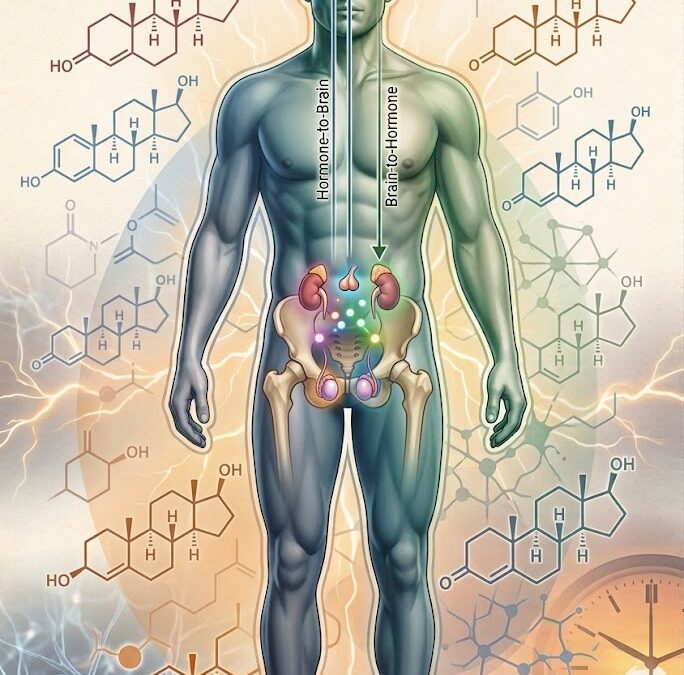
When most people hear the word andropause (often referred to as “male menopause” or age-related androgen deficiency), their minds jump straight to physical changes, sluggish recovery in the gym, changes in body composition, or dips in libido. However, one of the most profound, and often overlooked, impacts of declining testosterone happens above the neck.
If you or someone you know has felt an inexplicable cloud of brain fog, sudden irritability, or a subtle dip in sharpness around middle age, it isn’t just “getting older.” There is a direct biological link between declining androgen levels, mood stability, and cognitive health.
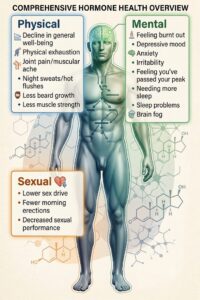
How androgen decline impacts both physical and neurological health
What Is Andropause?
Unlike menopause in women, which involves a rapid shutdown of estrogen production, andropause is a gradual process. Starting around age 30, testosterone levels naturally decline by roughly 1% per year.
Because testosterone receptors are densely clustered throughout the central nervous system, particularly in regions governing memory, executive function, and emotional regulation, this steady drop in circulating free testosterone directly impacts neurological signaling.
How Testosterone Loss Affects the Brain
Testosterone isn’t just a muscle-building hormone; it functions as a critical neurosteroid. When androgen levels fall below optimal thresholds, several key cognitive and emotional pathways are disrupted:
Mood Shifts, Irritability & Sadness
Testosterone influences the synthesis and availability of key neurotransmitters, particularly serotonin (the primary mood stabilizer) and dopamine (which drives motivation and reward pathways).
- The Mechanism: Lower circulating androgens mean reduced neurochemical support for positive mood states.
- The Clinical Picture: Men experiencing androgen deficiency frequently report unexplained feelings of sadness, emotional blunting, a loss of “drive,” and heightened irritability or a shorter fuse.
Cognitive Fog & Poor Concentration
The prefrontal cortex, the area of the brain responsible for focus, decision-making, working memory, and complex problem-solving, is heavily reliant on adequate androgen stimulation.
- The Mechanism: Testosterone promotes neuroplasticity (the brain’s ability to form new neural connections) and supports cerebral blood flow.
- The Clinical Picture: As levels drop, men often notice difficulty focusing during long meetings, trouble multitasking, or feeling like their thinking process has lost its usual sharpness.
Memory Impairment & Spatial Cognition
The hippocampus serves as the brain’s memory center. It contains a high density of androgen receptors that help consolidate short-term experiences into long-term memories.
- The Mechanism: Testosterone supports synaptogenesis (communication between brain cells) in the hippocampus and helps protect against oxidative stress and neural inflammation.
- The Clinical Picture: Men in midlife experiencing low testosterone may notice frequent “word-finding” delays, forget daily tasks, or struggle with visual-spatial orientation.
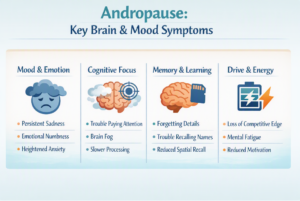
Key Symptoms At A Glance
The mental and emotional manifestations of androgen decline often overlap, creating a compounding cycle of stress and mental fatigue:
The Broader Picture: Sleep & Stress Interplay
It is also worth noting that androgen deficiency rarely exists in a vacuum.
- Sleep Quality: Low testosterone is frequently tied to altered sleep architecture (fewer periods of deep, restorative slow-wave sleep). Poor sleep independently impairs memory consolidation and mood the next day.
- Cortisol Spike: Elevated stress hormones (cortisol) further suppress testosterone production, creating a vicious cycle where stress lowers testosterone, and low testosterone reduces stress resilience.
Moving Forward: Actionable Steps
Understanding that mood changes and cognitive slips have a biological foundation is the first step toward addressing them effectively.
- Get Comprehensive Labs: Rather than guessing, evaluate Total Testosterone, Free Testosterone, SHBG (Sex Hormone-Binding Globulin), Estradiol, and Cortisol to get a complete physiological picture.
- Targeted Support: In addition to lifestyle foundations like resistance training, adequate protein, and sleep hygiene, exploring standardized dietary ingredients and targeted nutritional interventions can help support healthy hormone metabolism and neuroprotective pathways.
- Consult a Healthcare Professional: If mood changes or memory slips significantly impact daily functioning, working with an integrative or anti-aging health practitioner ensures a safe, comprehensive plan tailored to your hormone profile.
Supplement Support for the Mind-Hormone Connection
Because testosterone, cortisol, sleep quality, mitochondrial energy, and oxidative stress all influence brain performance, a targeted supplement strategy can support the mind-hormone connection from several angles. The goal is not to treat anything, but to help maintain healthy hormone signaling, focus, stress resilience, restorative sleep, and cellular protection as part of a broader lifestyle plan.
- Hormone Support: TestoSurge® — Supports healthy testosterone levels and male vitality, which may help reinforce the hormonal foundation behind motivation, mood, energy, and cognitive drive.
- Memory & Cognitive Performance: Bacopa — Bacopa monnieri is traditionally used for learning and memory support, with human clinical research most consistently pointing to benefits in memory recall after sustained use.
- Stress Resilience: Saffron and Ashwagandha — Saffron can support mood balance and relaxation, while ashwagandha acts as an adaptogen to help the body maintain a healthier stress response and cortisol rhythm.
- Sleep Quality: Saffron and Suntheanine® — Saffron may help support sleep quality, especially when stress or anxious tension disrupts rest, while Suntheanine, a branded form of L-theanine, promotes calm relaxation without heavy sedation.
- Antioxidant & Mitochondrial Protection: CaroRite® and Kaneka Ubiquinol® — CaroRite provides carotenoid antioxidant support, while Kaneka Ubiquinol supplies the reduced form of CoQ10 to support mitochondrial energy production and antioxidant defenses in high-demand tissues like the brain.
For best results, pair these ingredients with the fundamentals already discussed: resistance training, protein adequacy, sleep hygiene, blood sugar balance, and lab-guided hormone assessment. Anyone using medications, managing a medical condition, or considering hormone therapy should review supplement choices with a qualified healthcare professional.
The Bottom Line
Memory slips, irritability, and brain fog aren’t simply inevitable drawbacks of aging—they are clear signals from a brain adapting to shifting hormone dynamics. Recognizing the connection between andropause and cognitive function opens the door to proactive, targeted support.