


If you have suddenly found yourself lying awake at 3:00 AM wondering why your room feels like a sauna, or why even a simple daily task feels like thinking through thick fog, you are not alone. For millions of individuals in their mid-thirties to late forties, these unpredictable moments mark the beginning of a natural biological phase that remains surprisingly under-discussed: perimenopause.
While almost everyone is familiar with the term menopause, perimenopause is the multi-year journey that leads to it. It is a period of significant hormonal restructuring that affects far more than just your menstrual cycle. Understanding what is happening inside your body can transform this chaotic phase into a manageable and empowering transition.
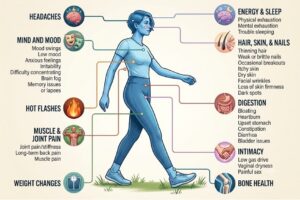
What Is Perimenopause?
The prefix peri- comes from the Greek word for “around” or “near.” Simply put, perimenopause is the transitional period leading up to menopause.
Menopause itself is technically just a single milestone in time: the point when you have gone 12 consecutive months without a menstrual period. Perimenopause, on the other hand, is the extended bridge leading to that milestone. It typically begins in a person’s 40s, though for many it can start in their late 30s. On average, perimenopause lasts anywhere from 4 to 8 years, though it can be shorter or longer depending on the individual.
During your primary reproductive years, your ovaries produce estrogen and progesterone in a relatively predictable, rhythmic cycle to prepare your body for potential pregnancy each month. During perimenopause, your ovarian reserve naturally declines. Instead of a steady, smooth reduction in hormones, the process looks much more like a rollercoaster ride, characterized by dramatic spikes and sudden plummets in estrogen and progesterone from month to month, or even day to day.
The Hormonal Rollercoaster: What Is Happening Inside?
To understand why perimenopause causes such a wide range of physical and emotional changes, it helps to look at the two key chemical messengers involved: progesterone and estrogen.
Why Progesterone Starts to Drop
Progesterone is one of the hormones that helps your body feel calmer, sleep more soundly, and manage the monthly buildup of the uterine lining. During perimenopause, your body does not release an egg every month as regularly as it once did. When no egg is released, your body usually makes little or no progesterone that cycle. This drop can make periods come closer together, sleep feel more restless, anxiety feel stronger, and spotting happen before a period.
Why Estrogen Can Feel Unpredictable
Estrogen does not simply fade away in a straight line. Instead, it can rise and fall sharply from one cycle to the next. When estrogen is low, you may notice hot flashes, night sweats, vaginal dryness, or sleep changes. When estrogen is high, you may notice heavier bleeding, breast tenderness, bloating, or water retention.
Because estrogen affects many parts of the body, including the brain, skin, heart, bones, digestion, and reproductive tissues, these ups and downs can create symptoms that seem unrelated at first. In simple terms, perimenopause can feel confusing because the same hormone changes can show up in many ways.
Common Symptoms of Perimenopause
Because every person’s body is unique, perimenopause symptoms vary dramatically. Some individuals notice only subtle shifts in their cycle, while others experience a wide array of symptoms that affect their daily quality of life.
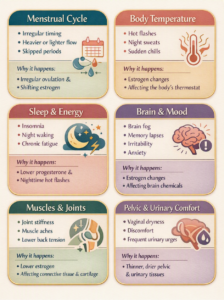
Irregular Periods
Changes to your menstrual cycle are usually the first noticeable sign of perimenopause. You might experience:
- Shortened cycle lengths: Going from a predictable 28-day cycle to 21 or 24 days.
- Flow variations: Unusually heavy bleeding one month followed by very light spotting the next.
- Skipped periods: Missing a period entirely, only for it to return two months later.
Note: While irregular bleeding is normal during this transition, extremely heavy bleeding (soaking through a pad or tampon every hour) or bleeding after intercourse should always be evaluated by a healthcare provider.
Hot Flashes & Night Sweats
Hot flashes are the quintessential perimenopause symptom, affecting up to 80% of individuals. A hot flash feels like a sudden wave of intense heat spreading across your chest, neck, and face, often accompanied by a rapid heart rate and sweating. When these occur at night, known as night sweats, they frequently cause micro-awakenings that disrupt deep sleep, leaving you exhausted the next morning.
Mood Shifts and Brain Fog
It is common to feel unusually irritable, tearful, or anxious during perimenopause, even without a prior history of mood disorders. Fluctuating estrogen levels directly influence brain chemistry by altering neurotransmitters like serotonin and dopamine, which regulate mood.
Additionally, many people describe experiencing brain fog: forgetting familiar words, misplacing keys, or struggling to concentrate on complex tasks. Rest assured, research shows this cognitive dip is temporary and tends to resolve once the body stabilizes post-menopause.
Major Changes Across the Body
Perimenopause is far more than a reproductive event; it is a systemic shift that influences almost every major body system.
Metabolism and Body Composition
As estrogen levels decline, the body’s insulin sensitivity and metabolic rate naturally shift. You may notice that body fat redistributes, moving from the hips and thighs toward the abdomen. Muscle mass also tends to decline more rapidly without targeted resistance training, which can lower your resting energy expenditure.
Bone Density
Estrogen plays an essential role in protecting bone health by inhibiting bone resorption. During late perimenopause and the early years of menopause, bone loss can accelerate significantly. Maintaining adequate calcium and vitamin D intake and engaging in weight-bearing exercises during this window are crucial for long-term skeletal strength.
Cardiovascular Health
Estrogen helps keep blood vessels flexible and supports healthy cholesterol levels by maintaining higher HDL (“good”) cholesterol and lower LDL (“bad”) cholesterol. As estrogen diminishes, cardiovascular risk factors can rise, making heart health a central priority during this phase.
Skin, Hair, and Connective Tissue
Collagen production declines as estrogen levels drop; in fact, skin can lose up to 30% of its collagen in the first five years around menopause. This can lead to drier skin, reduced elasticity, thinning hair, and increased joint stiffness, as collagen also provides structure to tendons and cartilage.
How to Navigate Perimenopause: Practical Strategies
While perimenopause is a natural biological progression, you do not have to simply endure severe discomfort. Targeted lifestyle modifications and medical options can make a substantial difference.
Lifestyle and Daily Habits
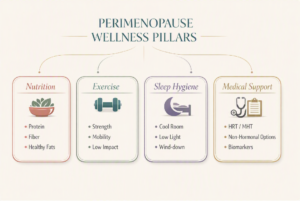
- Prioritize Protein and Resistance Training: To combat age-related muscle loss and metabolic shifts, aim for protein-rich meals paired with regular weight-bearing or strength training exercises 2–3 times per week.
- Nourish Core Biomarkers: Focus on nutrient-dense foods packed with calcium, vitamin D, omega-3 fatty acids, and dietary fiber to support gut health, bone density, and heart function.
- Practice Thermal and Sleep Hygiene: Keep your bedroom cool, use layered breathable bedding, and minimize alcohol and refined sugars in the evening, as both are notorious triggers for night sweats and sleep disruptions.
- Track Your Cycle and Symptoms: Keeping a simple digital or paper log of your periods and symptoms helps you identify patterns and provides valuable data when speaking with your doctor.
The Bottom Line
Perimenopause is not a disease to be cured; it is a profound physical recalibration. While the fluctuations can feel challenging, understanding the root causes gives you the tools to take proactive control of your well-being. By prioritizing nutrition, physical strength, sleep, and working alongside informed healthcare professionals, you can navigate perimenopause with clarity, confidence, and comfort.